
From Lagos to Bayelsa, Nigeria’s states now run their own power. Will it help?
Nigeria’s electricity sector is quietly being reshaped. Under the Electricity Act 2023, states can now create their own electricity markets and regulators, taking over from the federal regulator, the Nigerian Electricity Regulatory Commission (NERC), within their borders.
How it works
President Bola Tinubu signed the Electricity Act in June 2023, following a constitutional amendment that moved electricity from the federal government’s exclusive list to the concurrent list, where states can also legislate.
To take control, a state must:
- Pass its own electricity law.
- Set up a state electricity regulator.
- Formally notify NERC, which then transfers oversight.
NERC keeps authority over the national grid and over electricity that crosses state lines.
Who has moved so far
According to NERC chairman Musiliu Oseni, 16 states now regulate their own markets, with about 20 still to follow. The first transfers, in October 2024, went to Enugu, Ekiti and Ondo. Others followed, including Imo, Oyo, Edo, Kogi, Lagos, Ogun, Niger, Plateau and Abia, and in early 2026 Anambra, Nasarawa and Bayelsa.
In Lagos, NERC ordered the two distribution companies serving the state, Ikeja Electric and Eko DisCo, to create subsidiaries to handle supply within the state, licensed by the Lagos State Electricity Regulatory Commission. That transition was completed in June 2025 and has become a template for other states.
The promise
Supporters say state regulators can respond faster to local complaints, push for new generation close to where it is needed, and attract investment in local power plants, mini-grids and solar projects. Billing and metering disputes can now be handled in the state rather than in Abuja.
The risks
- Tariffs and subsidies. Some states have set tariffs that assume cheaper generation than is actually available. In Enugu, for example, NERC estimated that the state regulator’s Band A tariff implied a gap of about ₦67 per kilowatt-hour between the assumed and actual cost of generation, which someone will eventually have to pay.
- Investor uncertainty. Investors now deal with different laws, licences and tariffs in each state.
- Federal-state friction. Disputes between state and federal regulators may end up in court.
- The grid still matters. Most electricity still flows through the national grid, so state markets cannot escape problems with national generation and transmission.
More states, subsidies and mini-grids
- How many more states transition in 2027.
- Whether states that subsidise tariffs can pay for them.
- New power plants and mini-grids licensed by state regulators.
Sources: Energy News Network, 1 August 2026; NGN Market, 21 April 2026; NERC; Electricity Act 2023.
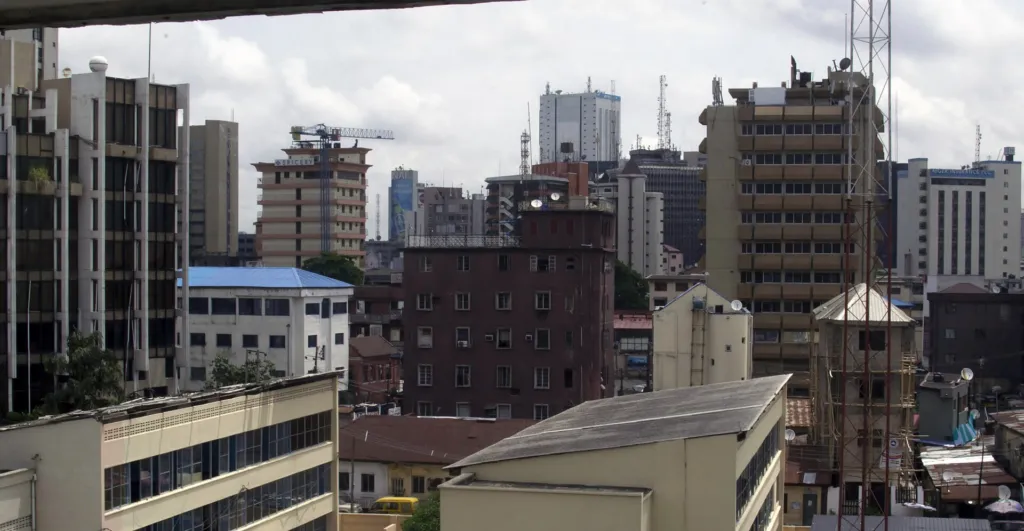
Top photo: Lagos Island. Lagos was one of the first states to take over regulation of its electricity market (file photo). Photo: Jamie Tubers, Wikimedia Commons, CC BY-SA 4.0
