
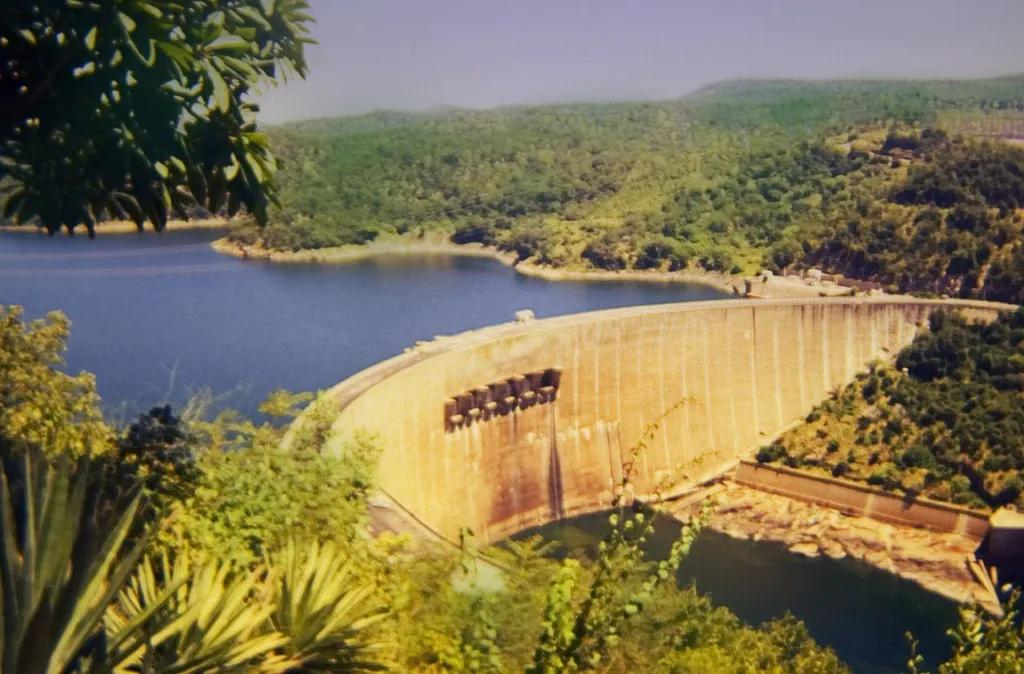
Zambia warned to prepare for power cuts as Kariba water allocation is slashed
Zambia emerged from its worst power crisis in decades only recently. Now there are warnings that load-shedding could return in 2027.
The water cut
The Zambezi River Authority (ZRA), which manages the Kariba Dam shared by Zambia and Zimbabwe, has cut the amount of water allocated for power generation in 2027 to 23 billion cubic metres, down from 36 billion in 2026. The water will be split equally between Zambia’s state utility, ZESCO, and the Zimbabwe Power Company, with 11.5 billion cubic metres each.
ZRA acting chief executive Peter Kapinga said the decision was based on regional forecasts pointing to below-normal rainfall across much of southern Zambia and Zimbabwe during the 2026/27 season, linked to strong El Niño conditions. Zambia’s meteorological department has warned of a possible “Super El Niño”.
Lake Kariba stood at about 480.65 metres above sea level in mid-October, higher than a year earlier, but ZRA projects that usable water will fall to about 9 percent of live storage by the end of 2027.
“Prepare in advance”
Former energy minister Yamfwa Mukanga urged households and businesses to prepare for possible power cuts now. “Citizens must prepare in advance for possible power cuts rather than wait until loadshedding begins,” he said, calling on the government to share supply fairly if rationing returns.
Remembering 2024
In 2024, a severe drought cut Kariba’s water so sharply that Zambians faced power cuts of up to 20 hours a day or more. Mines, factories, farmers and small businesses suffered heavy losses.
In June 2026, ZESCO managing director Justin Loongo said nationwide load management was not expected to return, citing more hydro, thermal and solar generation and new private power producers. The new forecast tests that confidence.
The solar cushion
Zambia’s position is stronger than in 2024. Installed solar capacity has passed 1,000 megawatts (MW), up from about 188 MW in 2024, and makes up about 22 percent of the country’s total installed capacity of about 4,700 MW. But solar produces power only in daylight, and Zambia still depends on hydropower for most of its supply, especially at night.
What to watch
- Rainfall in the 2026/27 season and Kariba’s water level.
- Any announcement of load-shedding schedules by ZESCO.
- Power imports and new solar and battery projects.
Sources: Lusaka Times, 16 October 2026 and 10 June 2026; Zambezi River Authority; ZNBC.
Top photo: The Kariba Dam on the Zambezi, shared by Zambia and Zimbabwe (file photo). Photo: Rhys Jones, Wikimedia Commons, CC BY 2.0
