
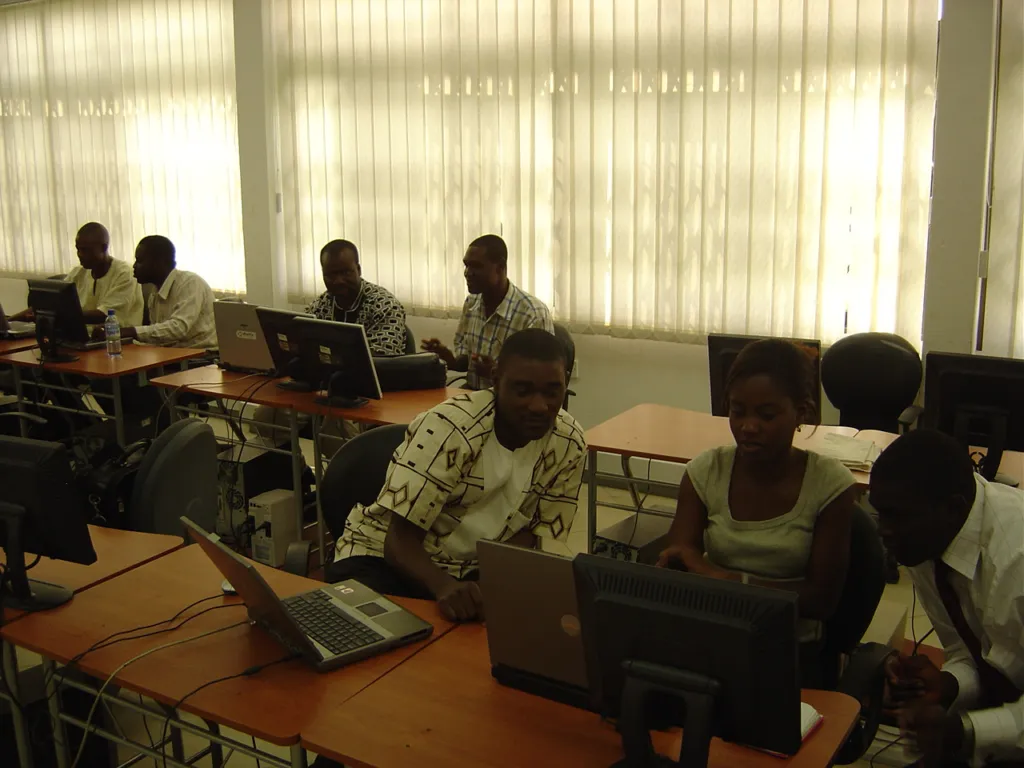
Ghanaians rush to learn AI, but a skills gap remains
Ghanaians are signing up to learn artificial intelligence in record numbers. Whether that translates into better jobs is another question.
The numbers
According to Coursera’s Global Skills Report 2026, published on 28 September, Ghanaian learners on the platform showed sharp increases over the past year:
- AI micro-credential enrolments rose by 95 percent.
- Critical-thinking course enrolments rose by 66 percent.
- AI security learning rose by 235 percent.
But Ghana ranked 89th out of 98 countries on Coursera’s AI-Human Skills Synergy Index, which measures how well people combine AI tools with skills such as judgement, communication and problem-solving.
Which jobs could change
Analysts generally expect AI to affect roles such as these:
- At risk: routine administration, document processing, customer service and some content production.
- Growing: cybersecurity, data management, software development and AI implementation.
AI is already being used in Ghana. Some banks use AI chatbots to answer customer queries, and the Ghana Revenue Authority says its Publican AI system brought in an extra GH¢1 billion in customs revenue in April alone. Farmers can access AI tools for weather forecasts and spotting crop diseases.
The worries
Commentators have raised concerns that matter to Ghanaian workers:
- Job losses in routine office work, if employers use AI mainly to cut staff.
- Surveillance, if AI is used to monitor employees.
- Fairness, if AI is used in hiring or performance reviews without clear rules.
- Errors and bias, since AI tools can produce wrong answers or reveal confidential information if used carelessly.
The policy response
Retraining is a key part of Ghana’s National AI Strategy, launched in April. The government’s One Million Coders Programme aims to build a pipeline of digital and AI talent.
The opposition is also weighing in. On 2 November, Dr Mahamudu Bawumia, flagbearer of the New Patriotic Party (NPP), called for laws to protect workers from AI-related job losses. “Artificial Intelligence should be a tool to complement human labour and not a substitute for it,” he told the Trades Union Congress, according to the Ghana News Agency. He proposed that the government, unions, employers and technology experts draw up rules that include retraining and reskilling.
Experts say employers also have a role: involving workers in decisions about AI, offering training, and setting clear safeguards.
What to watch
- Whether training programmes reach people outside Accra and Kumasi.
- How employers, unions and regulators handle AI in the workplace.
- Ghana’s ranking in next year’s skills reports.
Sources: Coursera Global Skills Report 2026; Ministry of Communications, Digital Technology and Innovations; TechAfrica News, 19 October 2026; allAfrica, 20 October 2026; Ghana News Agency, 2 November.
Top photo: Technology students and developers at the University of Ghana, Legon (file photo). Photo: Paul Scott, Wikimedia Commons, CC BY-SA 2.0
