
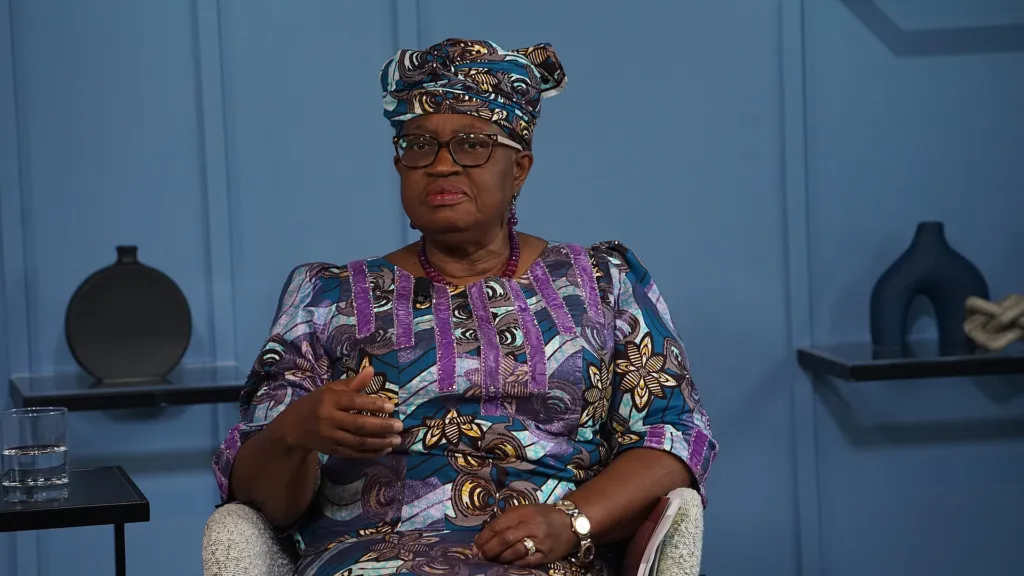
Ngozi Okonjo-Iweala: the Nigerian economist steering world trade
When the World Trade Organization’s 166 members agreed in November 2024 to give Ngozi Okonjo-Iweala a second term as director-general, they did it early and without a contest. It was a vote of confidence in a Nigerian economist who has spent four decades at the centre of global finance, and who in 2021 became the first woman and the first African to lead the WTO.
From Ogwashi-Ukwu to Harvard
Okonjo-Iweala was born on 13 June 1954 in Ogwashi-Ukwu, in what is now Delta State, Nigeria, into a family of academics. She lived through the Nigerian civil war as a teenager, an experience she has often said shaped her interest in development.
She went to the United States to study, earning an economics degree from Harvard in 1976, then a master’s in city planning and, in 1981, a PhD in regional economics and development from the Massachusetts Institute of Technology.
Twenty-five years at the World Bank
She joined the World Bank as a young development economist and stayed for around 25 years, rising to managing director for operations, the bank’s second-highest post. In that role she oversaw a large share of the bank’s lending to Africa, South Asia, Europe and Central Asia.
Nigeria’s finance minister, twice
She first returned home in 2003 to serve as President Olusegun Obasanjo’s finance minister. Her best-known achievement came in 2005, when she led the negotiations with the Paris Club of creditor nations that wiped out about $30 billion of Nigeria’s foreign debt, including $18 billion in outright cancellation. She also briefly served as foreign minister in 2006.
She took the finance post again from 2011 to 2015 under President Goodluck Jonathan, with responsibility for the wider economy. It was a turbulent period. She pushed reforms of the fuel subsidy regime and public finances, faced fierce resistance, and later wrote about the threats she and her family received in her book Fighting Corruption Is Dangerous (2018). An earlier book, Reforming the Unreformable (2012), describes her first term.
Vaccines and the pandemic
Between her government and WTO roles, she chaired the board of Gavi, the Vaccine Alliance, from 2016 to 2020, helping to fund immunisation for millions of children in low-income countries. In 2020 the African Union appointed her a special envoy on the economic impact of COVID-19.
Leading the WTO
She took office at the WTO in March 2021, during the pandemic and at a time of deep scepticism about the organisation’s relevance. Its system for settling trade disputes had been paralysed since 2019, and major economies were openly turning to unilateral tariffs.
Her first term delivered a 2022 agreement curbing harmful fisheries subsidies, the first WTO agreement focused on environmental sustainability, as well as a pandemic-era waiver on vaccine patents. Her second term began on 1 September 2025.
In March 2026 she led the WTO’s 14th Ministerial Conference in Yaoundé, Cameroon, only the second time the WTO’s top decision-making meeting has been held in Africa. The results were mixed. Groups of members moved ahead with deals on e-commerce and investment facilitation, and more countries joined an interim arrangement for appeals in trade disputes. But ministers failed to agree on wider WTO reform or a final fisheries package, and the long-standing moratorium on customs duties for electronic transmissions lapsed. Talks on the unfinished “Yaoundé package” moved to Geneva.
Why she matters
For many Africans, Okonjo-Iweala is a symbol of what the continent’s talent can achieve on the world stage. She has used her platform to argue that global trade must work better for poorer countries, pressing for vaccine manufacturing in Africa, supporting the African Continental Free Trade Area and urging investment in women-led businesses.
Her challenge in her second term is steep: keeping a rules-based trading system alive at a time when its biggest members are increasingly willing to ignore it. Few people are better prepared for the job.
Sources: World Trade Organization; Ripples Nigeria, 29 November 2024; World Economic Forum, April 2026; published biographies.
Top photo: Ngozi Okonjo-Iweala at New York Climate Week, September 2025. Photo: Xuthoria, Wikimedia Commons, CC BY-SA 4.0
