
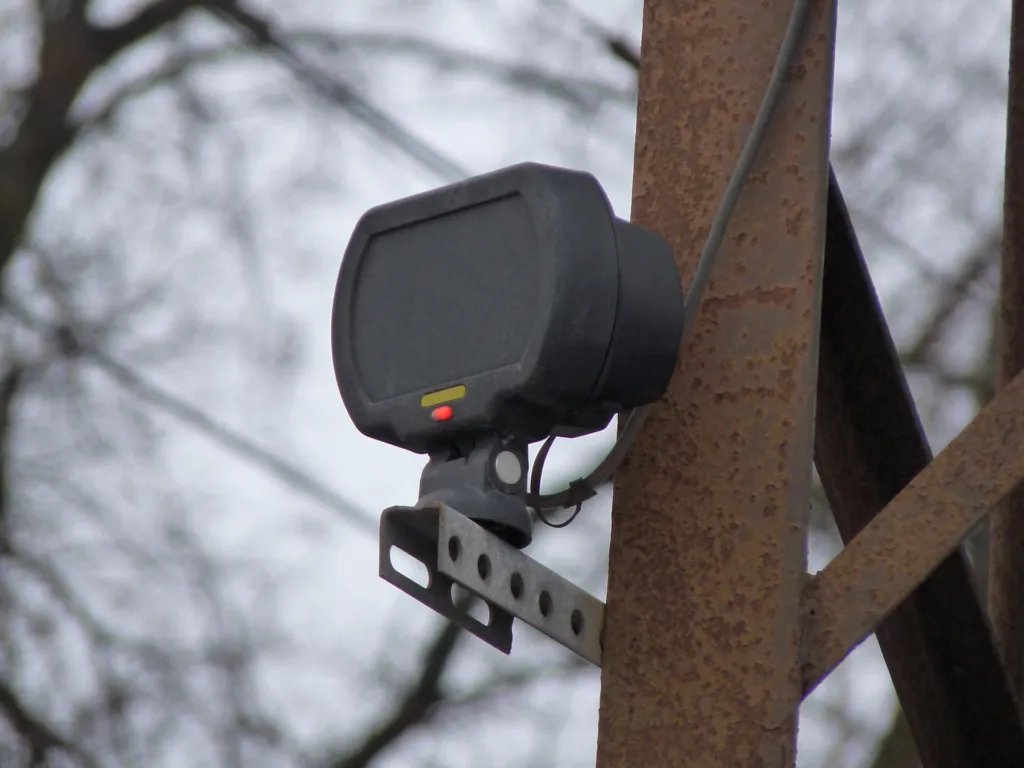
How TraffiTech-GH works: cameras, text-message fines and mobile money
TraffiTech-GH, which went live on 1 November, replaces a police officer with a radar gun at the roadside with a chain of technology: a camera records the offence, a control room checks it, a text message delivers the fine, and the driver can pay from a phone. Here is how each step works.
Step 1: the camera
At launch the system targets speeding only. Cameras are mounted in police vehicles and on tripods, alongside fixed cameras and handheld devices, and are placed at locations the Motor Traffic and Transport Department (MTTD) says are prone to crashes. The law behind it is the Road Traffic (Amendment) Act, 2025 (Act 1153) and the Road Traffic Regulations, 2026 (L.I. 2519).
ACP Alexander Kwaku Obeng of the MTTD told 3News that the digital system lets police gather evidence without stopping drivers, impounding vehicles or taking motorists to police stations and courts.
Step 2: the control room
Footage is reviewed at a central control room, and a person signs off before any penalty is issued, according to Techlabari. The vehicle is matched to its registered owner. “We have your vehicle numbers embedded,” ACP Obeng told Joy FM.
Step 3: the text message
The owner receives an Electronic Notice of Violation (ENV) by SMS from the sender ID GPS-MTTD, with a ticket number, the offence, the place, the time and the amount. Evidence can be checked on the TraffiTech-GH payment website using the ticket number. Owners without a smartphone or internet access can call the police call centre on 059 692 2402.
The police say a genuine notice never contains a clickable link. That matters, because fake fine texts from ordinary mobile numbers appeared a day after launch, 3News reported. Suspicious messages can be reported on 191 or the toll-free 18555.
Step 4: paying, or challenging
This is where Ghana’s mobile money habit helps. Fines can be paid on the payment website by card or mobile money (MTN, Telecel or AirtelTigo), or by dialling 7100#, which works on a basic phone without internet. The police warn never to pay an officer in cash or send money to a personal number.
Owners have 14 days to pay or contest. A challenge must be started online, after which a hearing is arranged at a regional MTTD station and then in court. Paying the fine ends the right to contest it.
How it compares
- Rwanda. The first camera went up in July 2019, and the network went nationwide in April 2021. Police say the cameras use lidar, watch both directions of traffic and trigger at about 10 per cent over the limit. A 2024 study in Traffic Injury Prevention linked them to a 38 per cent fall in monthly road deaths.
- Kenya. The National Transport and Safety Authority switched on cameras that send speeding fines by SMS in Nairobi in June 2026, after a court challenge had held up the rollout.
- Lagos, Nigeria. Speed and red-light cameras installed with Huawei have sent fines by text message since February 2025: ₦50,000 for speeding and ₦20,000 for running a red light.
The weak links
The technology is only as good as the records behind it. Commentaries in Techlabari and Citi Newsroom warn that out-of-date vehicle ownership records could send fines to the wrong people, and that fake number plates and missing speed signs could undermine trust. Scammers copying the SMS format are a further risk, which is why the police stress the GPS-MTTD sender ID.
For the road safety picture and the drivers’ dispute, see our companion piece, “Four days after TraffiTech-GH went live in Ghana, what we have learned”.
Sources: Ghana Police Service, TraffiTech-GH page; 3News, 1 November; Techlabari; MyJoyOnline, 2 November; 3News, 2 November; Rwanda National Police, 5 July 2024; Traffic Injury Prevention, 2024; Kenyans.co.ke, 5 June; BusinessDay, 7 February 2025; Citi Newsroom, 3 November.
Top photo: A roadside speed camera on the Paldiski highway in Tallinn, Estonia (illustrative file photo, not a TraffiTech-GH camera). Photo: Dmitry G, Wikimedia Commons, public domain
