
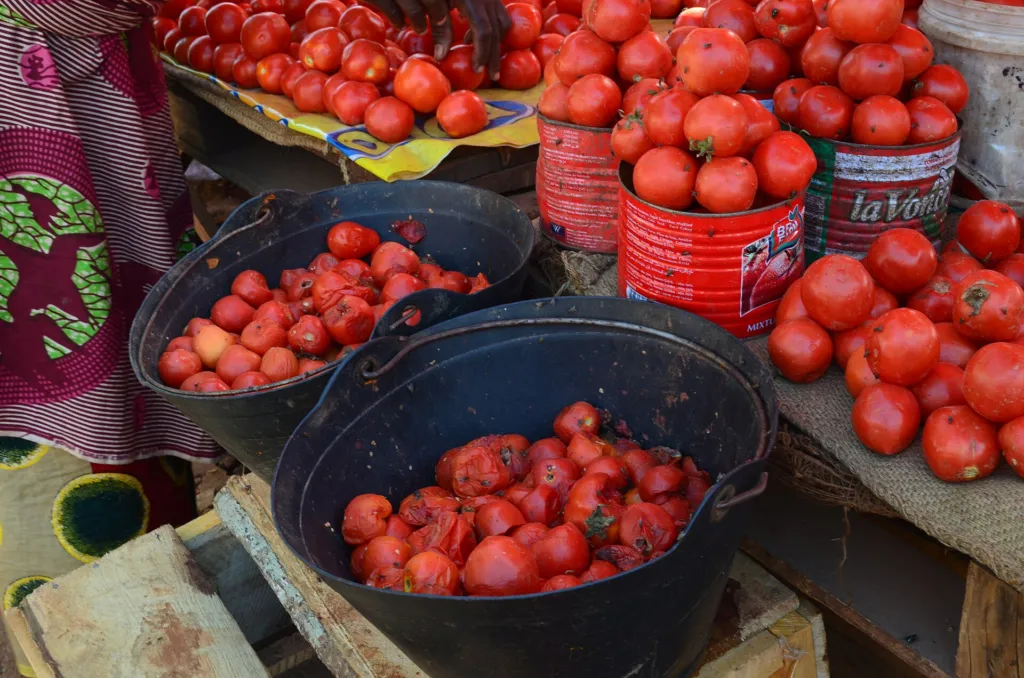
Tomatoes up 119% on a year ago, transport up 8% in a month: the prices behind Ghana’s budget on Thursday
Finance Minister Cassiel Ato Forson presents Ghana’s 2027 budget to Parliament on Thursday, 12 November. It comes as prices are creeping up again: inflation has risen for three months in a row, transport fares jumped in October and diesel is dearer at the pump this month.
What is the budget expected to do?
The government says the focus will be jobs. President John Mahama has announced a four-year, US$10 billion “New Economy” investment plan for 2027 to 2030, aimed at tourism, textiles and garments, agriculture and agribusiness, pharmaceuticals and oil palm. The budget is expected to show how it will be paid for.
“Next week, I will show how the New Economy will turn the gains we have made together into jobs and prosperity for all,” Forson said last week, according to Graphic Online. “Ghanaians made sacrifices to get our economy back on its feet.”
Unnamed sources told MyJoyOnline that the budget will target growth of about 5 percent and inflation of 8 percent next year, with a band of 2 points either side, and that overall spending will not be very different from 2026. Neither figure has been confirmed.
What has happened to prices?
Ghana’s annual inflation rose to 5.5 percent in October, from 5.2 percent in September, the Ghana Statistical Service reported on 4 November. That is still well below the 8 percent of a year earlier, but the mix has shifted:
- Food inflation eased to 2.8 percent. Maize was 27.2 percent cheaper than a year ago, and local rice 14.3 percent cheaper.
- Tomatoes were the exception, up 119.3 percent on a year earlier.
- Services inflation jumped to 11.5 percent from 8.3 percent, driven by an 8 percent rise in transport prices in a single month.
- Ashanti had the highest rate of any region, at 9.7 percent.
“Of every GH¢1 of price rise in October, about 76 pesewas came from non-food and 24 pesewas from food,” said Government Statistician Alhassan Iddrisu.
What about fuel?
For the first half of November, the National Petroleum Authority’s price floor for petrol fell to GH¢15.39 a litre from GH¢16.09, while the floor for diesel rose to GH¢17.41 from GH¢17.09. LPG eased to GH¢13.73 a kilogram. At the pump, Star Oil cut petrol to GH¢16.38 a litre but raised diesel to GH¢18.45, up 50 pesewas. Diesel matters well beyond car owners, because it moves most of the trotros and lorries that carry people and food. The next pricing window opens on 16 November.
What people are saying
The opposition says the official figures miss the pressure on households. “You can’t even use GH₵20 to buy kenkey and fish anymore,” Kwesi Botchway Jnr, a deputy director of communications for the New Patriotic Party, said on Asempa FM on 8 November. “It takes the grace of God to get three square meals in this country.”
He questioned the government’s emphasis on stable inflation figures. Inflation is far below the double-digit rates of two years ago, and the Bank of Ghana has kept its policy rate at 14 percent.
Key dates
- 12 November: the 2027 budget is read in Parliament.
- 16 November: the next fuel pricing window.
- Early December: November inflation figures.
Clarification, 10 November 2026: the headline was changed to make clear that the 119 percent rise in tomato prices is compared with a year earlier. The 8 percent rise in transport prices was over one month.
Sources: Graphic Online, 5 November 2026; MyJoyOnline, 29 October 2026; Graphic Online, 4 November 2026; Citi Newsroom, 28 October 2026; Ghanamma/The Independent Ghana, 2 November 2026; GhanaWeb/MyNewsGh, 8 November 2026.
Top photo: Tomatoes for sale in a market in Tamale, Ghana (file photo, 2015). Photo: Ibn Shiraz, Wikimedia Commons, CC BY-SA 4.0
