
DR Congo and M23 agree a peace roadmap. Can it hold?
The government of the Democratic Republic of Congo and the AFC/M23 rebel alliance have agreed a roadmap setting out how and when they will negotiate a lasting peace for eastern Congo.
The agreement came after closed-door talks hosted by Switzerland from 17 to 21 August, with the United States, Qatar, the African Union Commission and Togo, the AU’s mediator, also at the table. It is the latest step in a process that has produced several signed documents but, so far, no end to the fighting.
What the roadmap says
According to a joint statement published by Switzerland, the roadmap lays out “sequenced steps and timelines for negotiations” under the Doha Framework Agreement that the two sides signed in Qatar in 2025. Specifically, the parties agreed:
- A standard way to report ceasefire violations, so that accusations can be checked rather than simply traded.
- Ceasefire verification missions, the first of which was due in Minembwe in South Kivu.
- A review mechanism to monitor progress and deal with problems in carrying out the agreement.
Why a roadmap and not a peace deal?
Earlier agreements have struggled because they set out goals without a clear process for reaching them. Fighting continued after the Doha framework was signed, and each side has accused the other of breaking ceasefires.
A roadmap is less dramatic than a final peace deal, but potentially more useful. It commits both sides to a sequence: first stop the shooting and verify it, then negotiate the harder political questions.
The questions still unresolved
Those harder questions include:
- Territory. M23 seized large parts of mineral-rich eastern Congo in 2025, including the regional capitals Goma and Bukavu. Any lasting deal must decide who governs these areas and how.
- Rwanda’s role. Congo, the United Nations and Western governments accuse Rwanda of backing M23 with troops and weapons. Kigali denies directing the group but says it faces security threats from armed groups in Congo. A separate track of US-led talks has focused on Congo–Rwanda relations.
- The fighters’ future. Whether M23 members would be integrated into the army, disarmed or given political roles.
- Minerals. Eastern Congo holds vast deposits of tin, tantalum, gold and other minerals. Control of mines and trade routes has fuelled conflict for decades.
Since the roadmap: Kabila and US sanctions
Two developments since the August talks have raised the stakes.
- Kabila’s new movement. On 12 October, former President Joseph Kabila launched the Front for the Refoundation of the Nation (FRN) in Goma. Congolese media present it as the successor to the Congo River Alliance (AFC), the political coalition linked to M23, and its vice-presidents include AFC/M23 leaders Corneille Nangaa, Bertrand Bisimwa and Sultani Makenga. Its founding text says it will fight the government “by all means, including force”, according to the Congolese news site Actualite.cd. On 15 October, Kinshasa restricted the activities of 13 political parties, including Kabila’s PPRD.
- US sanctions on Rwanda. On 28 October, the US Treasury sanctioned Rwanda’s defence ministry and the Zigama Credit and Savings Society, accusing Rwanda of deploying thousands of troops in North and South Kivu and supplying M23 with equipment and training. “Rwanda must halt its support for M23 and withdraw its troops from eastern DRC,” Treasury Secretary Scott Bessent said. Rwanda has consistently denied backing armed groups in Congo.
The human cost
The fighting has displaced millions of people. Now it is also complicating the response to Congo’s deadliest-ever Ebola outbreak, which has spread into rebel-held areas of North Kivu. Health officials have recorded new cases in M23-controlled health zones, making cooperation between the two sides a matter of public health as well as politics.
What to watch
- Whether the verification missions can work freely on both sides of the front line.
- Whether the next round of talks moves from procedure to substance, including the status of Goma and Bukavu.
- Whether outside backers, including Rwanda, the United States and Qatar, keep up the pressure on both sides, and whether the US sanctions change Rwanda’s course.
- Whether Kabila’s FRN takes the AFC/M23 seat at the negotiating table, or becomes a new obstacle to it.
After decades of failed agreements in eastern Congo, scepticism is natural. But a ceasefire that can actually be checked would be a real step forward for the millions of people living with the conflict.
Sources: Euronews/Swiss government joint statement, 24 August 2026; OkayAfrica, 2 October 2026; Actualite.cd via Rio Times, October 2026; AP via ABC News, 28 October 2026; Critical Threats.
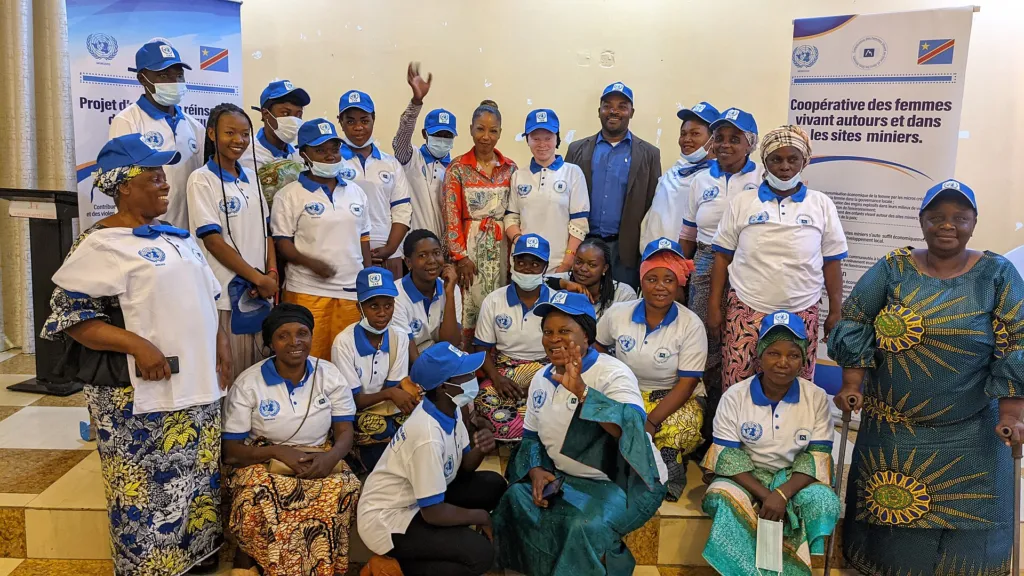
Top photo: Residents of Goma, North Kivu (file photo, 2022). Photo: MONUSCO Photos, Wikimedia Commons, CC BY-SA 2.0
