
Bank of Ghana cuts its key rate to 11%, a multi-decade low. What changes for loans and savings?
The Bank of Ghana has cut its benchmark interest rate by 3 percentage points, from 14% to 11%. Governor Johnson Pandit Asiama announced the decision on 18 November after the 133rd meeting of the Monetary Policy Committee (MPC), held from 16 to 18 November.
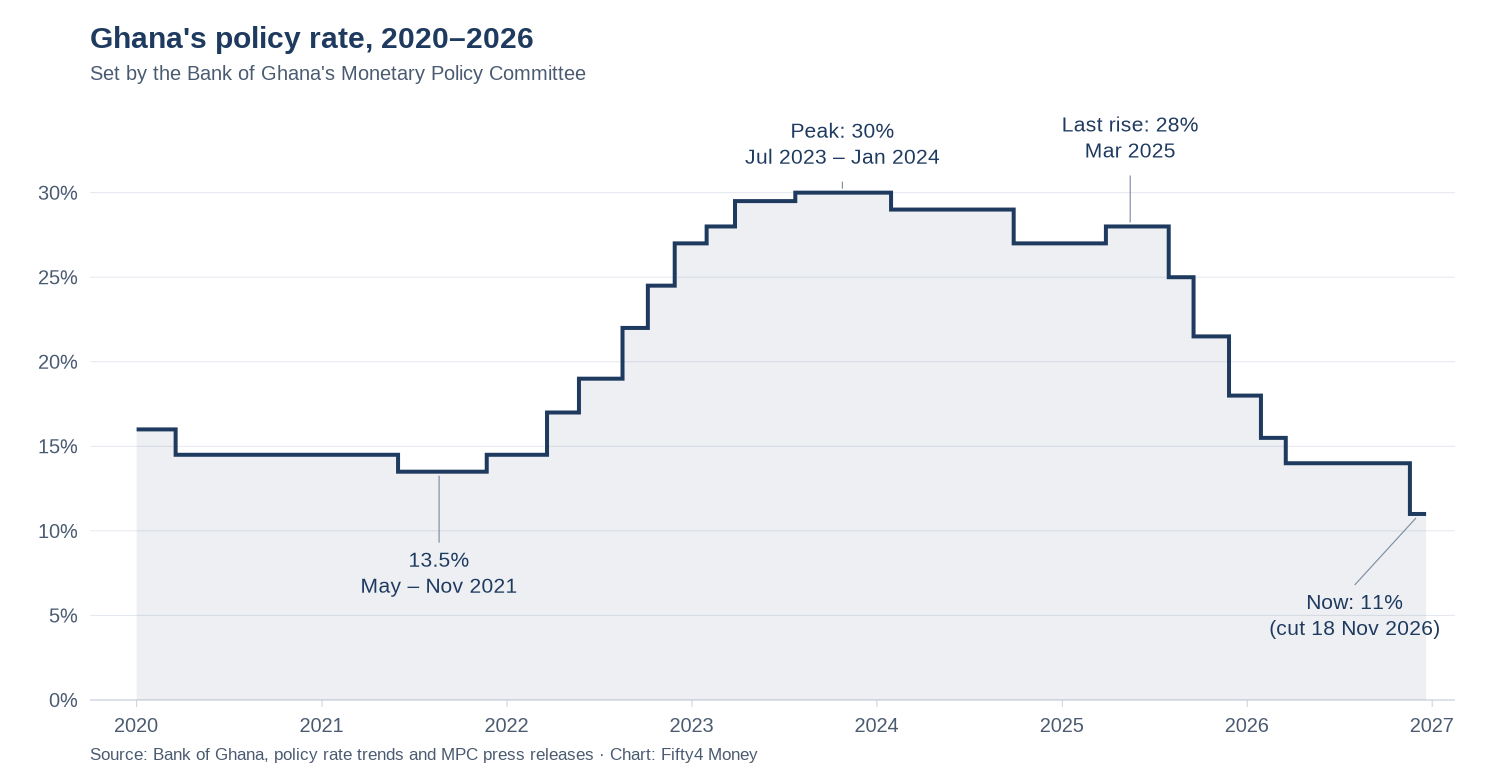
It is the first change since March and ends three straight holds at 14%. GBC News reports that 11% is below the previous floor of 12.5%, last seen between 2006 and 2011.
Why did the Bank cut now?
The Governor gave two main reasons.
- A stronger economy. “Taken together, the Committee noted significant improvements in domestic macroeconomic conditions,” he said, as quoted by Citi Newsroom. The Bank’s index of economic activity rose 17.7% year on year in September.
- Market rates had already fallen. Treasury bill and interbank rates were trading well below 14%. Dr Asiama said “prevailing market rates have evolved at levels below the current monetary policy rate”, and described the cut as a realignment of the policy rate with the market.
The Bank is also changing how it runs the money markets: a seven-day instrument replaces the 14-day open market operation, and the corridor around the policy rate narrows from 4 percentage points either side to 1.
Is inflation not a worry?
Not for now. Headline inflation rose slightly to 5.5% in October, from 5.2% in September, according to the Ghana Statistical Service. That is still below the Bank’s medium-term target of 8%, plus or minus 2 points.
The mix is shifting:
- Food inflation fell to 2.8%, from 4.0%, on better food supply.
- Non-food inflation rose to 7.9%, from 6.2%, driven by higher utility tariffs and crude oil prices.
The Bank expects inflation to move gradually back into its target range. It named oil prices, the effect of El Niño on food production and the quarterly utility tariff reviews as the main risks.
How far have rates fallen?
A long way. The policy rate peaked at 30% in 2023 and was last raised, to 28%, in March 2025. Since the first cut in July 2025, the Bank has lowered it by 17 percentage points.
Banks have followed, if more slowly. The average lending rate fell to 15.8% in October, from 22.2% a year earlier. Lending to the private sector grew 37.2% over the year to October, or about 30% after inflation.
What does it mean for borrowers and savers?
- Borrowers could see loan rates fall further as banks reprice, although banks set their own rates and changes often take months.
- Savers should expect lower returns. The 364-day Treasury bill paid 9.46% at the 16 November auction, about 3.8% above inflation in real terms, but yields usually drift down after a cut.
- The cedi traded at about GHS 11.75 to the US dollar on 17 November. Lower rates can make cedi assets less attractive to foreign investors, so the exchange rate is worth watching.
Gross international reserves stood at US$12.1 billion on 17 November, enough for 4.4 months of imports, down from US$13.8 billion at the end of 2025. The Bank called the external position resilient, but noted higher foreign payment obligations.
What happens next?
The next MPC meeting is due in January 2027. Live figures for Ghana’s policy rate, Treasury bills, inflation and the cedi are on the Fifty4 Money Ghana page.
For information only, not investment advice. Speak to an SEC-licensed investment adviser or broker before investing.
Sources: Bank of Ghana, MPC Press Release, November 2026; Citi Newsroom, 18 November 2026; Graphic Online, 18 November 2026; GBC News, 18 November 2026; MyJoyOnline, 18 November 2026; Fifty4 Money: Ghana
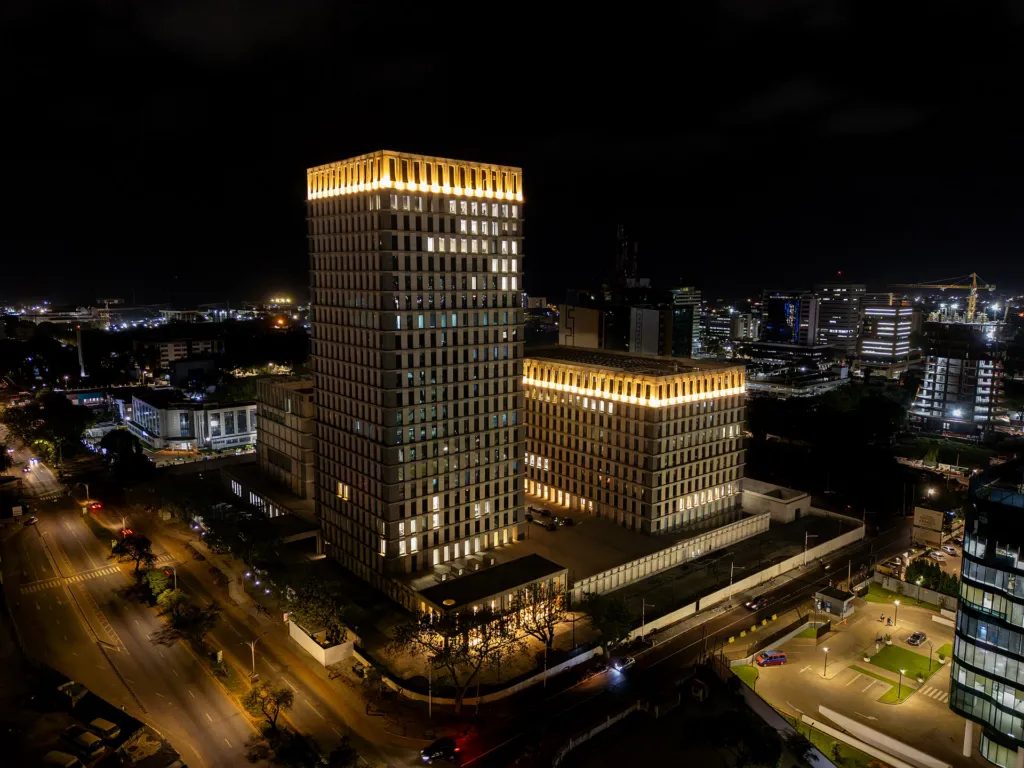
Top photo: Bank Square, the Bank of Ghana head office in Accra, designed by Adjaye Associates (file photo). Photo: Peoplelikeme2000, Wikimedia Commons, CC BY-SA 4.0
