
Tundu Lissu cleared of treason, jailed for four years: what it means for Tanzania
Tanzania’s most prominent opposition politician, Tundu Lissu, has been cleared of treason but jailed for four years. On 6 November, a three-judge panel of the High Court in Dar es Salaam found that prosecutors had not proved the intention needed for treason, a charge that can carry the death penalty, and convicted him of incitement instead.
The case has become a symbol of how far Tanzania’s political space has narrowed, and of the tensions that followed last year’s deadly election. Lissu says he is innocent and has asked for bail while he appeals. His notice of appeal was filed at the Court of Appeal on 9 November; no hearing date has been set.
Who is Tundu Lissu?
Lissu is the leader of Chadema, Tanzania’s main opposition party, and a lawyer by training. He has a long history of confrontation with the authorities:
- In 2017, he survived an assassination attempt in which he was shot multiple times outside his home in Dodoma.
- He spent years in exile in Belgium, returning to Tanzania in 2023.
- He has been arrested several times.
He was detained again in April 2025 and charged with treason over remarks he made at a Chadema meeting in Dar es Salaam on 3 April that year. Prosecutors alleged that he incited the public to boycott the general election, after Chadema campaigned under the slogan “No Reforms, No Elections”, demanding changes to the electoral system before any vote took place.
The election and its aftermath
President Samia Suluhu Hassan won the 2025 election with 98 percent of the vote, according to official results. The vote was followed by protests that were met with force.
The opposition and rights groups say thousands of people were killed by security forces during the unrest. The government has said more than 500 people died, without saying who was responsible. Tanzania has faced strong international criticism over the crackdown.
The verdict
- The panel, led by Judge Dunstan Ndunguru, ruled that the prosecution had not proved an intention to intimidate the government, which a treason conviction requires.
- It convicted him instead of incitement under Section 390 of the Penal Code, treating it as a lesser, related offence. Lissu says he was never charged with incitement.
- The court chose a prison term over a fine and sentenced him to four years. The state attorney had asked for a severe sentence to deter others.
- Lissu, who represented himself, said he had spent 577 days in custody. The court told him he has the right to appeal; no bail was announced.
Lissu has denounced the case as political, accusing the judges of turning the court into “an arena for political warfare”. During the trial he asked the court to summon senior government officials, including President Hassan herself, as defence witnesses, and complained that his lawyers and witnesses were not allowed to visit him in prison.
A shift in Tanzania’s politics
When Samia Suluhu Hassan became president in 2021, after the death of John Magufuli, she was initially praised for easing restrictions on the opposition and the media, under what she called her “4R” agenda of reconciliation, resilience, reforms and rebuilding. Opposition rallies were allowed again and exiled politicians returned.
Critics say that opening has since reversed. Chadema’s campaign for electoral reform, the arrest of its leader and the violence around the 2025 vote have left the country’s politics more polarised than at any time in recent decades.
A test of Tanzania’s reputation
Tanzania has long been seen as one of East Africa’s most stable countries. How it treats its leading opposition figure will shape its relations with Western partners and investors, and its own prospects for reconciliation.
The appeal and the time already served
- Lissu’s appeal, and whether he is granted bail while it is heard.
- How the 577 days he has already spent in custody count towards the four-year term.
- Any moves towards political dialogue or electoral reform.
Sources: The Chanzo, 6 November 2026; The Chanzo, 10 November 2026; Al Jazeera, 6 November 2026; Africanews, 21 and 22 August 2026; The Standard (Kenya), 21 August 2026; The EastAfrican.
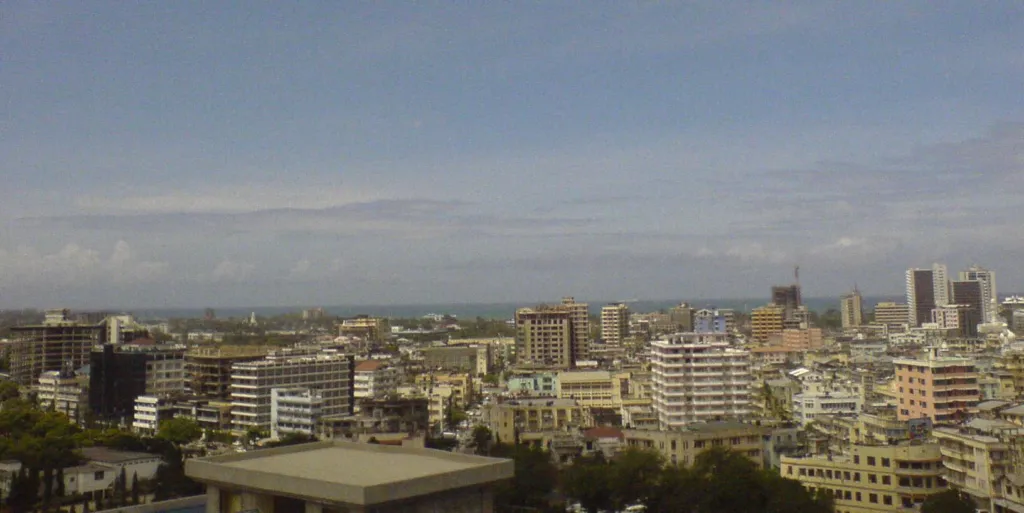
Top photo: The Dar es Salaam skyline (file photo). Photo: Ali Damji, Wikimedia Commons, CC BY-SA 4.0
