
Sassou Nguesso’s fifth term: Congo-Brazzaville and the price of continuity
In March, Denis Sassou Nguesso was re-elected president of the Republic of Congo with 94.82 percent of the vote, according to official results. The 83-year-old former paratrooper has now led the country, with one interruption, for more than four decades.
The election
The vote was held on 15 March. Sassou faced six little-known challengers. The closest, Mabio Mavoungou Zinga, received just 1.48 percent.
The main opposition parties did not field candidates, citing a lack of transparency. Two of the best-known opposition figures, Jean-Marie Michel Mokoko and André Okombi Salissa, have been in prison for nearly a decade after challenging Sassou in the 2016 election.
Official turnout was reported at 84.65 percent, although many polling stations in the capital, Brazzaville, had short queues or none at all. There was a nationwide internet blackout on election day. Activists reported arrests of human rights defenders and suspensions of opposition parties before the vote.
A long rule
Sassou first came to power in 1979. He lost the country’s first multiparty election in 1992 and returned to power in 1997 after a civil war. A new constitution adopted by referendum in 2015 removed term limits and the presidential age limit, allowing him to run again. Under its rules, this term is meant to be his last.
The economy
The Republic of Congo, home to about six million people, is one of sub-Saharan Africa’s larger oil producers, and oil dominates its exports and government revenue.
The country went through a long downturn after oil prices fell in 2014, and its debt became unsustainable. It has since restructured debts with several creditors and completed a three-year programme with the International Monetary Fund. The economy has stabilised, but daily life remains hard: according to the World Bank, more than half the population lives in poverty, and many people lack reliable electricity, running water and basic health care.
Corruption is a persistent concern. Prosecutors in France and the United States have investigated assets abroad held by members of Sassou’s family.
Abroad, Sassou has moved closer to Russia. He held talks with Vladimir Putin in Moscow in April and met him again at the Russia-Africa summit in Moscow in late October, where Putin pointed to a 2026 to 2028 cooperation plan and an investment-protection treaty.
The succession question
Because this is officially his final term, attention is turning to who comes next. Members of Sassou’s family hold important positions in politics and business, and analysts expect the ruling Congolese Party of Labour to dominate any transition. The absence of a strong, free opposition makes the process harder to predict from outside.
Central Africa’s long-serving leaders
Congo-Brazzaville is part of a group of Central African states, including Cameroon and Equatorial Guinea, where leaders have held power for decades. How these long-serving presidents manage their eventual departures will shape the stability of the whole region.
Successors, oil money and the opposition
- Appointments that signal a possible successor.
- Oil revenues and debt payments.
- The treatment of opposition figures and activists, including the jailed former candidates.
Sources: The EastAfrican/Reuters, March 2026; Africanews, 17 March 2026; AP; World Bank; Africanews, 29 April 2026; The Rio Times, 1 November 2026.
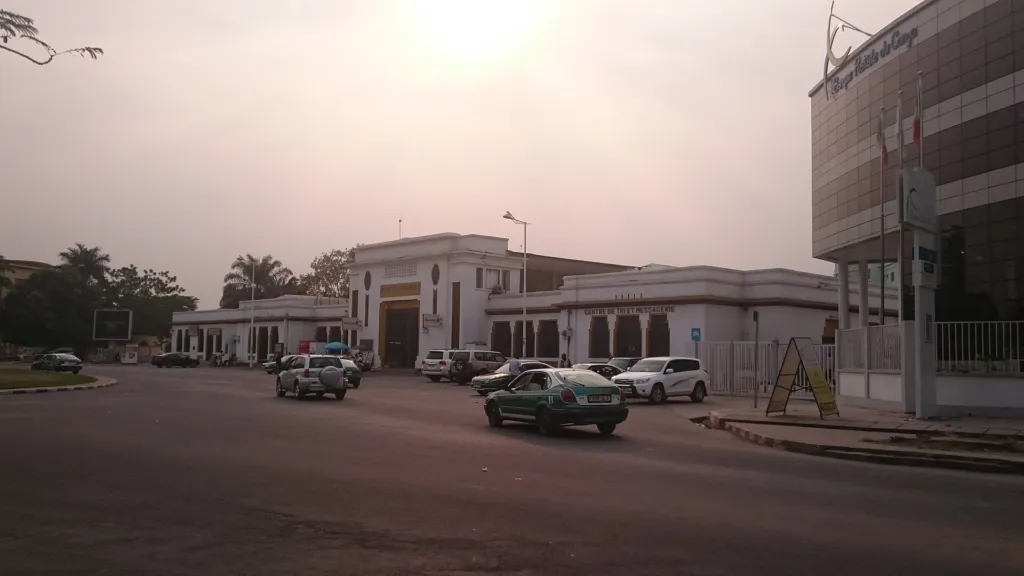
Top photo: The main post office in Brazzaville at the end of the day (file photo). Photo: Alacoolwiki, Wikimedia Commons, CC BY-SA 4.0
