
Western Sahara: Morocco’s autonomy plan gains backers as Polisario holds out for a referendum
Updated 25 November 2026: this story now includes the end of the UN mission in Western Sahara, MINURSO, on 31 October.
The diplomatic tide on Western Sahara, one of Africa’s longest-running territorial disputes, continues to move in Morocco’s favour. But the Polisario Front, which seeks independence for the territory, and its main backer Algeria have not changed their position.
The latest shift
On 23 September, Mauritius said it considered Morocco’s autonomy plan “the most credible” solution to the dispute, according to a statement after a meeting between the two countries’ foreign ministers. Mali endorsed the plan in April.
Morocco says more than 130 countries now support its proposal or its territorial claims. That figure comes from the Moroccan government and is difficult to verify independently; supporters range from countries that formally recognise Moroccan sovereignty to those that only call the plan a serious basis for talks.
The UN resolution
The key turning point came in October 2025, when the UN Security Council adopted Resolution 2797. It called for negotiations on the basis of Morocco’s autonomy plan, describing genuine autonomy under Moroccan sovereignty as possibly the most feasible outcome. It also renewed the mandate of the UN mission in the territory, MINURSO.
The United States, which recognised Moroccan sovereignty over Western Sahara in 2020, backed the resolution, as did France and the United Kingdom, both of which shifted towards the autonomy plan in recent years. Algeria did not take part in the vote.
The UN mission ends
A year later, the Security Council failed to renew MINURSO. On 30 October Russia vetoed a US draft that would have extended the mission for a year, renamed it and named Morocco’s autonomy plan as the “only” basis for negotiation. A rival Russian draft did not win enough votes. The mandate lapsed on 31 October, and the mission’s staff, including about 150 military personnel, began leaving on 1 November, PassBlue reported.
Morocco welcomed the mission’s end and pledged to respect the ceasefire. The Polisario said it would oppose any Moroccan move to take more territory, and on 10 November it declared a “general mobilisation” against Morocco. UN Secretary-General António Guterres said the mission’s departure does not end the Sahrawi people’s right to self-determination.
What Morocco proposes
Morocco’s plan, first presented in 2007, would give the territory a local parliament and government with powers over many internal affairs, while Rabat would keep control of defence, foreign policy and religion. Morocco already controls and administers most of the territory and has invested heavily in infrastructure there, including the port of Dakhla.
The other side
The Polisario Front, which proclaimed the Sahrawi Arab Democratic Republic (SADR) in 1976, rejects autonomy as the only option. It insists on a referendum in which the Sahrawi people could choose independence, as promised in the 1991 UN-brokered ceasefire. That referendum has never been held, largely because of disagreements over who should be allowed to vote.
The SADR is a full member of the African Union and is recognised by several dozen countries, mostly in Africa and Latin America. Tens of thousands of Sahrawi refugees still live in camps near Tindouf in Algeria. The Polisario declared the ceasefire over in 2020 and says it is waging a low-level armed struggle.
Algeria says the issue is one of decolonisation and self-determination under international law, and says it is not a party to the conflict. Its dispute with Morocco over the territory is a main reason the two neighbours cut diplomatic relations in 2021.
A dispute that splits the AU
Western Sahara divides the African Union and blocks closer cooperation in the Maghreb. It also shapes Morocco’s relations with countries across the continent, as Rabat uses investment, trade and diplomacy to win support.
Talks and the Security Council
- Whether the UN envoy can bring Morocco, the Polisario, Algeria and Mauritania to formal talks.
- Whether the UN keeps any presence on the ground now that MINURSO has gone.
- Further recognitions, or withdrawals of recognition of the SADR, among African states.
Sources: Hespress and Morocco World News, September 2026; PassBlue, 10 November 2026; UN Security Council; Reuters; Polisario Front and Algerian foreign ministry statements.
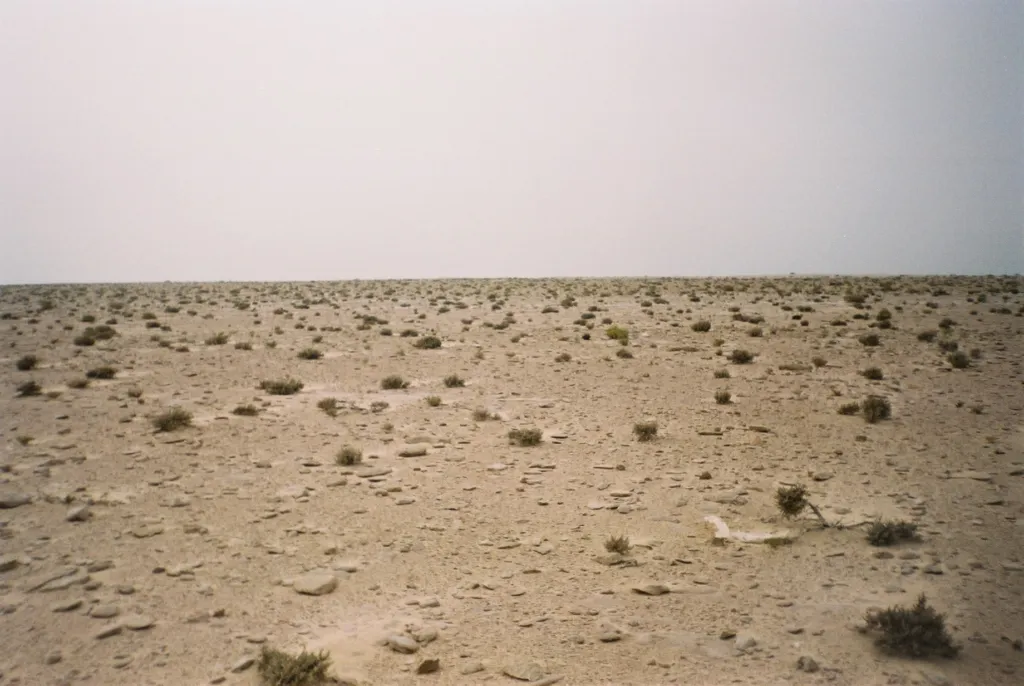
Top photo: Desert landscape in Western Sahara (file photo). Photo: Radosław Botev, Wikimedia Commons, Attribution
