
Egypt’s surprise rate hike: the central bank moves as the pound hits a record low
Egypt’s central bank surprised markets on 29 October by raising interest rates for the first time since March 2024. All 13 analysts in a Reuters poll had expected it to hold rates for a sixth meeting in a row.
What the bank decided
The Central Bank of Egypt (CBE) raised its main rates by one percentage point:
- the overnight deposit rate to 20 percent, from 19 percent
- the overnight lending rate to 21 percent, from 20 percent
- the main operation and discount rates to 20.5 percent, from 19.5 percent
The bank said it acted because of “an unfavorable external environment and rising uncertainty”, and to “anchor expectations and preserve the disinflation path”, Reuters reported. It expects growth to stay broadly stable, close to the 4.7 percent recorded in the second quarter.
Why it moved now
- A record-low pound. The dollar passed 56 Egyptian pounds on 26 October, the weakest level on record for the currency. A weaker pound makes imports, from fuel to wheat, more expensive.
- Energy prices. The US-Israeli war on Iran pushed up global oil and gas prices. Egypt is a net importer of fuel, so higher prices feed directly into costs at home.
- Prices turning up again. Annual urban inflation eased to 13.9 percent in September from 14.5 percent in August, but prices rose 1.3 percent in September alone, after 0.1 percent the month before. October figures, released a week after the decision, showed urban inflation easing to 12.7 percent and monthly price growth slowing to 0.7 percent. The bank’s target is 7 percent, plus or minus 2 points.
The CBE had already warned of this in May, when it held rates but sharply raised its inflation forecasts. It now expects inflation to average 16 to 17 percent in 2026, up from an earlier estimate of 11 percent, and 12 to 13 percent in 2027, up from 8 percent.
A long road back
Egypt has spent the past few years recovering from a severe foreign currency crisis. In 2024 it allowed the pound to fall sharply, raised interest rates and agreed an expanded programme with the International Monetary Fund. A record investment deal with the United Arab Emirates to develop Ras El-Hekma on the Mediterranean coast brought in billions of dollars of fresh foreign currency.
Those steps eased shortages of dollars and helped bring inflation down from the very high levels of 2023 and early 2024. The new energy shock threatens to slow that progress.
The US connection
Egypt’s strategic importance to Washington has also been on display. Around the start of October, the US State Department waived human rights conditions on $320 million in military financing for Egypt, citing Cairo’s “helpful role” since the war with Iran began. Rights groups criticised the decision, noting that Egyptian police had arrested six journalists from an investigative news outlet days earlier.
Why it matters to ordinary Egyptians
Higher interest rates help to keep inflation in check and make the pound more attractive to investors, but they also raise the cost of borrowing for businesses, households and the government. Egypt already spends a large share of its budget on interest payments, which limits what it can spend on health, education and subsidies.
For households, the question is simpler: whether bread, fuel and transport prices keep climbing. With inflation forecast to stay in double digits through next year, relief is likely to come slowly.
What happens next
- More hikes? S&P Global Market Intelligence expects further tightening through late 2026 and into early 2027, and BMI, a Fitch Solutions company, expects another one-point rise in December. JPMorgan expects the bank to hold in December unless the pound comes under serious new pressure, but sees annual inflation reaching 14.3 percent by the end of the year as the weaker pound feeds through.
- The pound. Whether the higher rates steady the currency after its slide to a record low.
- Oil. Energy prices and the course of the conflict involving Iran.
- Dollars. Suez Canal revenues, a key source of foreign currency that has been hit by disruption to Red Sea shipping, and further steps under Egypt’s IMF programme.
Sources: Reuters via Mereja, 30 October 2026; Rio Times, 29 October 2026; Business Today Egypt, 21 May 2026; OkayAfrica, 2 October 2026; Ahram Online; Rio Times, 6 November 2026 (October inflation); Egypt Daily News, 1 November 2026 (JPMorgan).
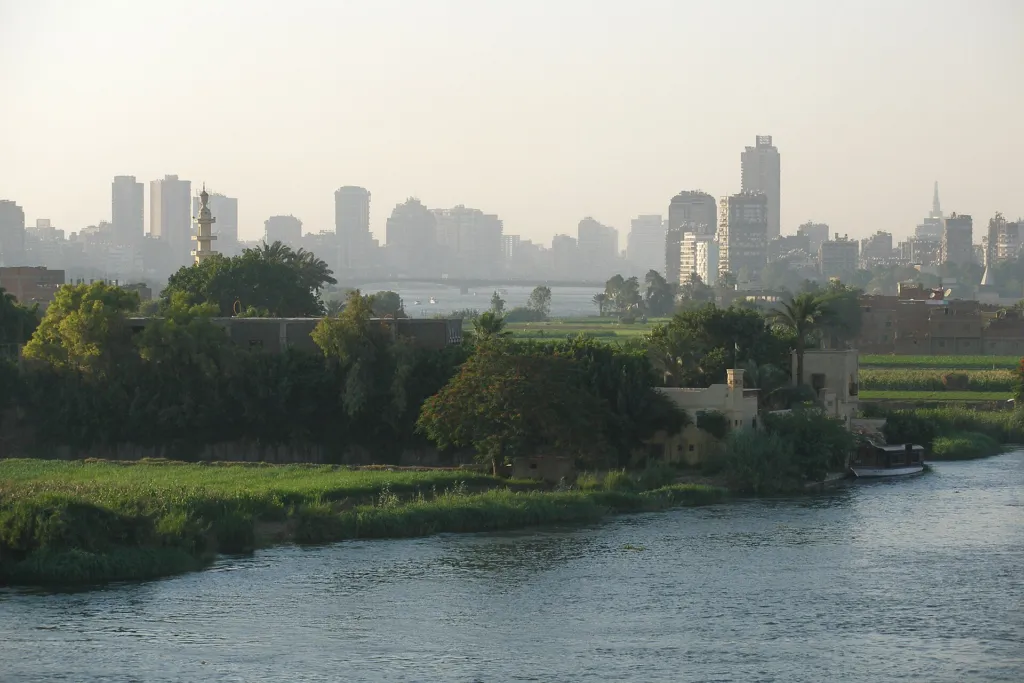
Top photo: The Nile and the Cairo skyline (file photo). Photo: Vyacheslav Argenberg, Wikimedia Commons, CC BY 4.0
