
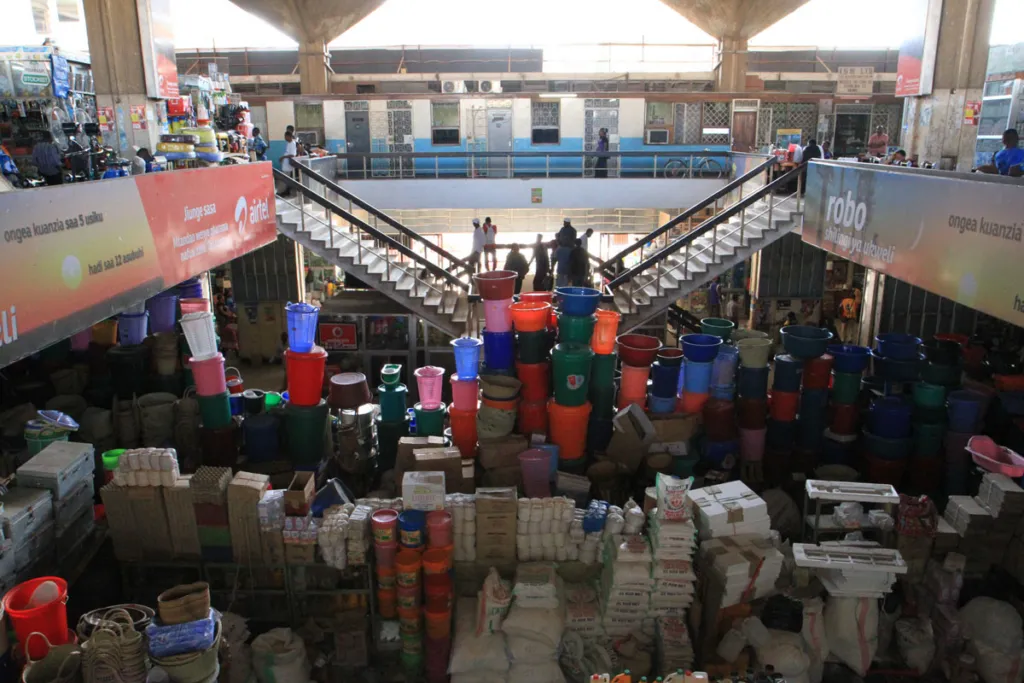
Inflation is creeping back up in many of Africa’s big economies
After a period of easing, inflation is picking up again across much of Africa. In September, annual consumer price inflation rose in several major African economies, including South Africa, Kenya and Ghana. The first October figures show the trend continuing: Kenya’s rate hit its highest level in more than three years, Ghana’s rose for a third month in a row and Uganda’s jumped to 5.8 percent. Uganda’s central bank raised rates sharply in October, and Egypt’s was worried enough to raise them by surprise.
Where prices rose in September, and where they fell
Inflation went up in: South Africa, Kenya, Ghana, Uganda, Mauritius and Tunisia. Egypt’s rate also edged up.
Inflation went down in: Nigeria, Ethiopia, Angola and Botswana.
The split reflects a mix of global and local forces. Countries that import most of their fuel have been hit hardest by higher world energy prices, while some economies that went through painful adjustments in recent years are still seeing inflation fall from very high levels.
Kenya: fuel and food lead the way
Kenya offers a clear example. Annual inflation rose to 7.3 percent in October from 6.8 percent in September, its highest level in more than three years and the fourth monthly increase in a row, according to the Kenya National Bureau of Statistics (KNBS). That is only 0.2 points below 7.5 percent, the top of the central bank’s target range.
- Food prices rose 10.2 percent from a year earlier. A 500 ml packet of milk went from KSh61 to KSh64 in a single month, and cabbages, potatoes and wheat flour also rose.
- Transport costs jumped 17.1 percent, the biggest increase of any major category. In Nairobi, the matatu fare from Westlands to Kangemi went up from KSh40 to KSh50.
- Fuel: petrol averaged about KSh228 a litre in October, up from KSh215 in September, diesel about KSh229 and kerosene about KSh221, a rise of almost 15 percent in a month.
Core inflation, which excludes food and energy, was 4.3 percent, while non-core inflation, which covers them, reached 15.1 percent. That suggests the pressure is coming from fuel and food, not from a general surge in demand. The KNBS said the rise was “primarily driven by a rise in prices of items in the Food and Non-Alcoholic Beverages” category.
Ghana: services push prices up
Ghana’s inflation rose to 5.5 percent in October from 5.2 percent in September, the third increase in a row, according to the Ghana Statistical Service. Food inflation actually eased, to 2.8 percent, but non-food inflation climbed to 7.9 percent and services to 11.5 percent, driven by an 8 percent monthly jump in transport prices and higher education and housing costs.
“Of every GH¢1 of price rise in October, about 76 pesewas came from non-food and 24 pesewas from food,” said Government Statistician Alhassan Iddrisu. Even after three rises, Ghana’s rate is far below the double-digit levels households faced two years ago.
Uganda: a weaker shilling bites
Uganda’s annual inflation jumped to 5.8 percent in October from 4.6 percent in September, its highest since May 2023, according to the Uganda Bureau of Statistics. Food crop prices rose 10.7 percent from a year earlier, up from 4.5 percent, and core inflation, which excludes food crops and fuel, climbed to 4.4 percent from 3.7 percent. Petrol was 34.3 percent dearer than a year earlier and diesel 49.2 percent.
The Bank of Uganda had already acted. At an emergency meeting on 14 October it raised its central bank rate by 2.25 percentage points to 12 percent, its first change since October 2024, citing the Middle East conflict, higher energy prices and pressure on the shilling.
Nigeria: a different story
Nigeria is moving in the opposite direction. Headline inflation eased to 14.63 percent in September, from 15.39 percent in August, and is more than 6 points lower than a year earlier, according to the National Bureau of Statistics. Falling inflation gave the Central Bank of Nigeria room to cut its benchmark rate by 3.5 percentage points to 23 percent in September, its biggest cut since 2006.
Egypt: a surprise rate hike
Egypt’s urban inflation actually eased to 13.9 percent in September, from 14.5 percent in August, and fell again to 12.7 percent in October, the lowest since January. But on 29 October the Central Bank of Egypt surprised markets by raising interest rates by one percentage point, its first increase since March 2024, taking the overnight deposit rate to 20 percent and the lending rate to 21 percent. Analysts surveyed the week before had all expected no change. The bank pointed to higher energy and commodity prices and said it wanted to keep inflation expectations “anchored”. Days earlier, the pound had hit a record low, with the dollar passing 56 pounds.
Why energy prices matter so much
Most African countries import refined fuel. When world oil prices rise, the cost feeds quickly into transport fares, food prices and electricity bills. Currency weakness makes it worse, because fuel is priced in dollars.
That is one reason why projects such as Nigeria’s Dangote refinery and a planned refinery in Kenya have drawn so much attention: domestic refining could reduce exposure to global price swings.
What it means for households and businesses
For families, rising inflation means less money for school fees, rent and savings. For businesses, it means higher costs and uncertain planning. For governments, it means pressure to cut fuel taxes or restore subsidies, at a time when many are trying to reduce debt.
What to watch
- October figures still to come from Nigeria, South Africa and others, and November figures in early December.
- Whether other central banks follow Uganda and Egypt and raise rates, especially in Kenya, where inflation is close to the top of the target range.
- World oil prices and the course of the Middle East conflict.
- Food prices ahead of harvests and the rainy seasons.
Sources: Kenya National Bureau of Statistics via Rio Times; Nairametrics, 22 September 2026; Business Today Egypt; Nairametrics, 26 October 2026; Trading Economics; Kenyans.co.ke (KNBS data), October 2026; Graphic Online, 4 November 2026; Nairametrics, 15 October 2026; Rio Times, October 2026; Trading Economics (Uganda Bureau of Statistics data), 30 October 2026; Nairametrics, 14 October 2026; Rio Times, 6 November 2026.
Top photo: Goods for sale at Kariakoo Market, Dar es Salaam (file photo, 2012). Photo: Development Planning Unit, University College London, Wikimedia Commons, CC BY 2.0
