
Who really runs DR Congo’s new digital ID? Questions over RDC-Pass
The Democratic Republic of the Congo (DRC) has moved its digital identity system, RDC-Pass, into a pilot phase in Kinshasa. The government says the system will let citizens prove who they are online and reach several state services with one login, instead of handing the same details to each office.
The project is being run under a 20-year public-private partnership with the local arm of a Singapore-based company, an arrangement that has drawn criticism over how the contract was awarded and who will control citizens’ data.
The Kinshasa pilot begins
The first group of registration agents began training in Kinshasa on 15 September. Their course covered the use of the equipment, personal data protection, traceability and the ethics and security rules for enrolling people. According to the newspaper Congo Quotidien, the first cohort of about 50 young people was chosen from more than 9,625 applications, the programme plans eventually to deploy 10,000 enrolment kits nationwide, and the first live access had been announced for October; no update on registrations has been published since.
“Digital transformation must reduce the distance between the state and the citizen, not create a new digital divide,” the digital economy minister, Augustin Kibassa Maliba, said at the start of the training, according to Biometric Update.
RDC-Pass at launch
President Félix Tshisekedi launched RDC-Pass on 13 June. Officials stress that it is not an identity card and does not replace the national identity programme or civil registration. “In time, our compatriots will no longer have to provide the same information to several administrations, or suffer the delays caused by the compartmentalisation of public services,” he said at the launch, according to Geopolis Magazine (translated).
Mr Kibassa called RDC-Pass “the first step in the digitalisation of our public services and a first step towards realising the vision of DRC Digital Nation 2030” (translated). According to Oeil d’Afrique, planned uses include biometric checks for SIM card registration, a single login for government platforms and automated checks for financial services.
RDC-Pass is part of a wider push. In October, Mr Kibassa reported that a decree by the prime minister had created a “digital counter” to serve as the single entry point for state online services, and that a national cybersecurity agency had been set up by presidential order. On 14 October he and the foreign minister, Thérèse Kayikwamba Wagner, announced plans for a single platform for electronic visas.
The concerns
The system is operated by Tridentity Digital Tech DRC Africa SAS, a subsidiary of Trident Digital Tech Holdings, which is based in Singapore and listed on the Nasdaq exchange in New York. According to Oeil d’Afrique, the partnership was signed in June 2025 and valued at $97.1m by the Ministry of Planning.
A commentary published by the Kinshasa outlet 7sur7.cd in September 2025 argued that the contract was awarded without competitive tender, that the company was small relative to the task, and that the DRC’s 2022 Digital Code reserves identification functions for public bodies. Oeil d’Afrique said in September that the cost to citizens, where biometric data will be stored, which courts would have jurisdiction and who will own the data after 20 years had not been disclosed, and that it had found no public government response to the criticism.
Mr Kibassa cited the Digital Code as the legal basis for RDC-Pass at its launch, according to Geopolis Magazine, and has stressed security, interoperability, data protection, inclusion and traceability, Oeil d’Afrique reported.
Registration numbers and transparency
- How many people register during the Kinshasa pilot, and when enrolment moves to the provinces.
- Whether the government publishes the terms of the Trident contract, including data hosting and ownership.
- How RDC-Pass links with the national identity programme, the new digital counter and the e-visa platform.
- The role of the new national cybersecurity agency in protecting the biometric database.
Sources: Biometric Update, 21 September 2026; We Are Tech Africa, 17 September 2026; Oeil d’Afrique, 17 September 2026; Congo Quotidien, 4 October 2026; Geopolis Magazine, 15 June 2026; Journal de Kinshasa, 15 October 2026.
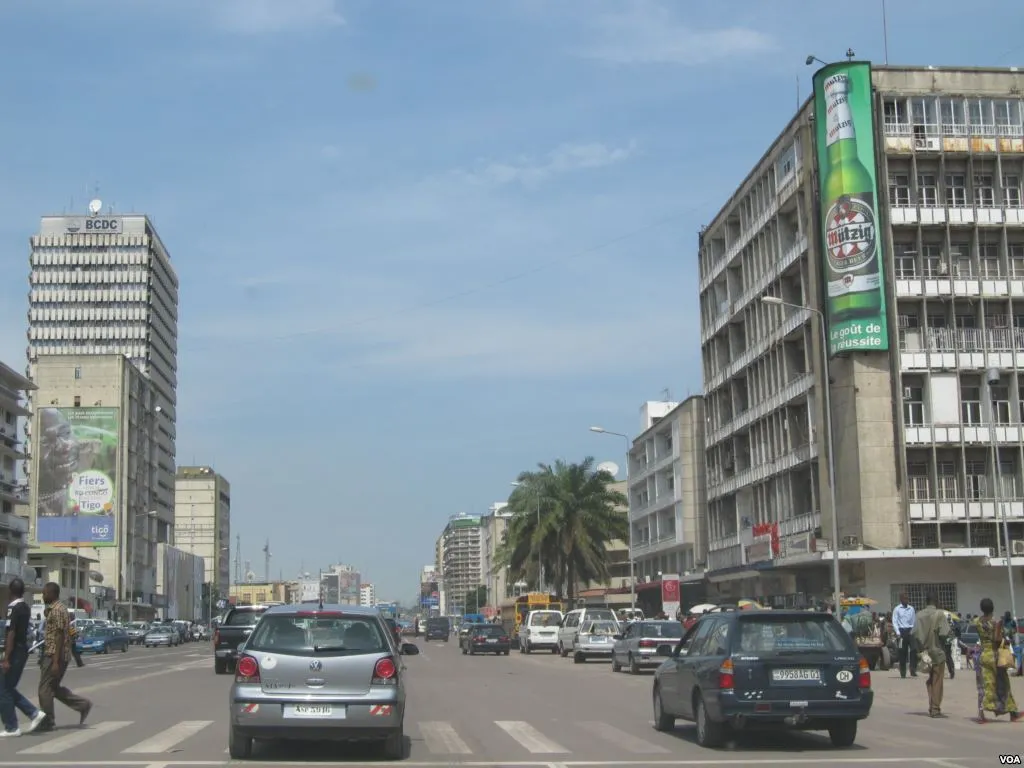
Top photo: Boulevard du 30 Juin in central Kinshasa (file photo). Photo: VOA, Wikimedia Commons, Public domain
