
DR Congo’s AI dream runs into an electricity problem
The Democratic Republic of Congo supplies much of the cobalt that goes into the batteries and chips behind the global AI boom. Its government wants the country to benefit from AI too, not just from its minerals.
The plans
According to The Times Congo:
- A National Digital Plan 2026 to 2030 worth $1.5 billion aims to make the country a technology hub.
- A national AI strategy is being led by the Ministry of Digital Economy.
- A Congolese AI Academy is to be built in Kinshasa to train specialists who can build solutions in Lingala, Swahili and Kikongo.
- An AI ethics report, supported by UNESCO, has been validated to limit algorithmic bias, inequality and abusive surveillance.
Digital Economy Minister Augustin Kibassa Maliba presented the government’s digital and AI strategy in August, describing the goal as a Congo that is “sovereign, connected, innovative and inclusive”. He has said that “investing in AI is investing in the country’s only truly inexhaustible resource”.
Early uses
- Agriculture: algorithms analysing satellite data could raise yields of cassava and cocoa, according to supporters.
- Health: start-ups such as WezaCare help rural nurses interpret complex diagnoses.
The power problem
The biggest obstacle is electricity. Only about 15 percent of Congolese have access to power, and supply in Kinshasa is unstable. That makes it very hard to attract the large data centres that AI requires.
A report published in January warned that without reliable power, the DRC risks “digital colonisation”: exporting its raw data for processing abroad and buying back AI services at high prices, while remaining a supplier of cobalt and coltan for other countries’ chips.
Experts suggest prioritising hydropower and solar for technology zones, and using solar mini-grids, such as those developed by start-up Nuru, to bring AI services beyond Kinshasa and Lubumbashi.
Other obstacles
- Ongoing conflict in the east of the country.
- Limited internet access and high data costs.
- A shortage of trained specialists.
The academy and the power to run it
- Construction of the AI academy.
- New power projects for data centres.
- Publication of an AI regulatory framework.
Sources: The Times Congo, 16 March 2026; Afrique IT News, 6 January 2026; Digital Business Africa, 5 August 2026.
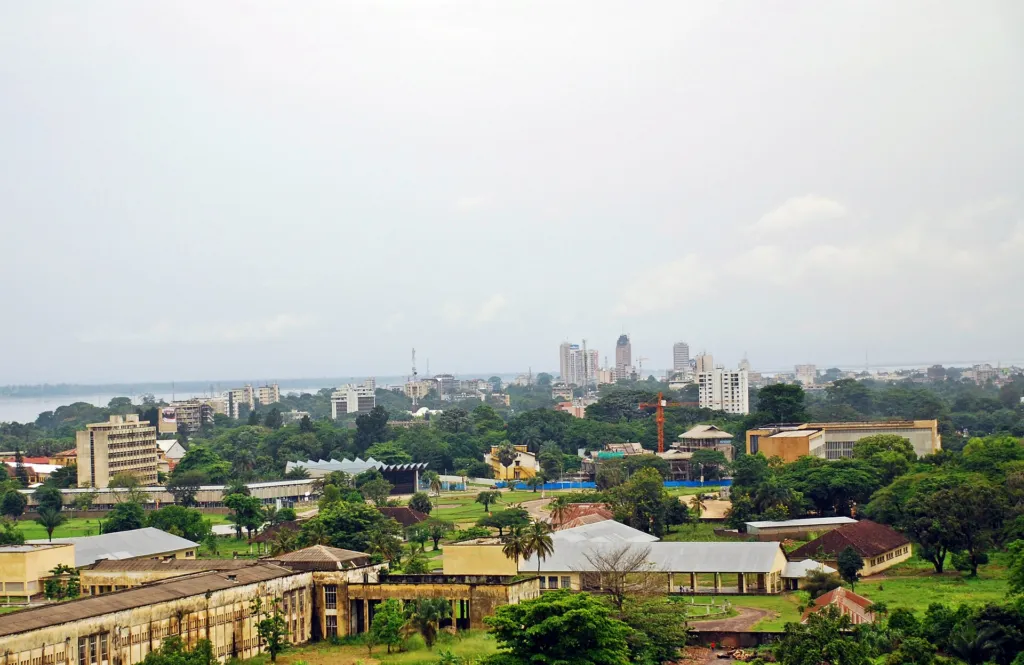
Top photo: Kinshasa, with the Congo river in the distance (file photo). Photo: Irene2005, Wikimedia Commons, CC BY 2.0
