
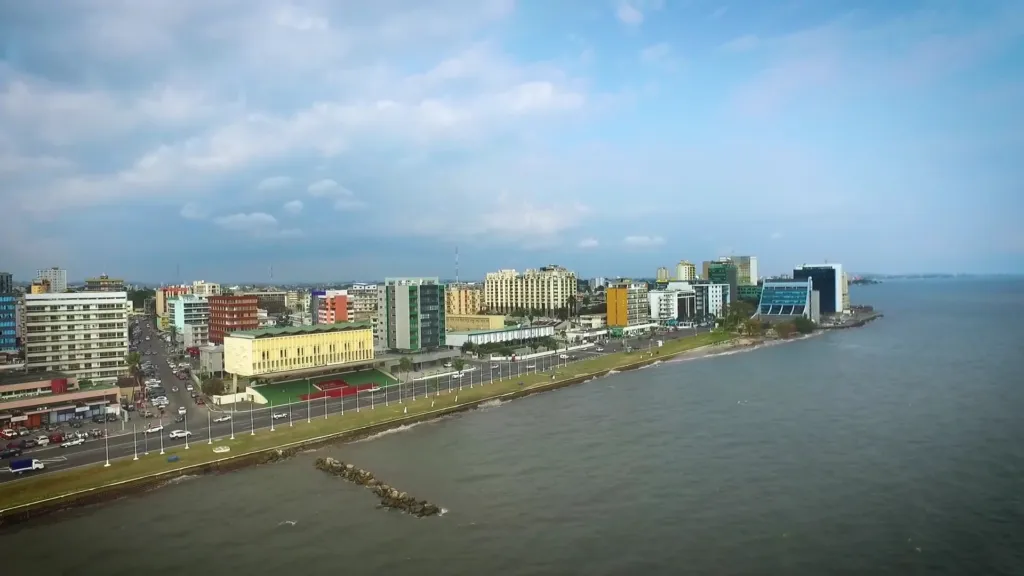
95% of the vote and oil running dry: Oligui Nguema’s big test in Gabon
In August 2023, General Brice Oligui Nguema led the coup that ended more than half a century of rule by the Bongo family in Gabon. In April 2025, he won a presidential election with 94.9 percent of the vote and about 70 percent turnout, formally closing the transition and starting a seven-year term.
The harder task is the economy. Gabon is a small, resource-rich country of about 2.5 million people, and the resource that built its wealth is in decline.
An economy built on three exports
Oil, manganese and timber make up about 97 percent of Gabon’s exports, according to the World Bank. Oil alone provided about half of tax revenue in 2023.
The problem is that Gabon’s oil fields are mature and shrinking. Crude output stood at about 227,000 barrels a day at the end of 2025, and a further decline of around 3 percent is expected in 2026. The World Bank describes the fall as structural rather than temporary.
Warning signs
- Growth. In May 2026, the government cut its growth target for the year from 6.5 percent to 4 percent. The IMF projects closer to 2.7 percent.
- Debt. Public debt was about 71 percent of GDP in 2024, above the 70 percent ceiling set by the Central African monetary union, CEMAC. The IMF projects it could reach about 86 percent in 2026.
- Prices. Inflation is low by African standards but is expected to rise above the regional central bank’s 3 percent target, and ending a subsidy on wheat flour could push food prices higher.
Gabon formally requested a new IMF programme in March 2026, with talks expected to conclude by the end of the year.
The plan: process minerals at home
Oligui Nguema’s government is betting on diversification:
- Manganese. Gabon is one of the world’s largest producers of manganese, used in steel and batteries. Planned output for 2026 was raised to about 9.4 million tonnes, and the government plans to ban exports of raw manganese ore from 2029 to force more processing inside the country.
- Iron ore and gold. New projects, including the large Belinga iron ore deposit, are being developed.
- A sovereign fund to manage resource revenues more transparently.
- Timber, agriculture and gas, building on Gabon’s earlier decision to ban raw log exports, which created a local wood-processing industry.
Chinese and French companies remain central to the country’s extractive industries.
The risks
Export bans can work, as Gabon’s timber policy showed, but they can also deter investment if processing plants are not ready in time. Higher spending on infrastructure and social programmes, which the government has promised, will be hard to finance while oil revenues fall and debt rises.
A test case for military-led transitions
Gabon is a test case for the military-led transitions in francophone Africa. Unlike the juntas of the Sahel, Oligui Nguema has kept close ties with France and Western lenders, and held elections relatively quickly. If he can manage the decline of oil without a debt crisis, his government could become a model. If not, the economic strain could undermine the stability he promised.
IMF talks, oil and manganese
- The outcome of IMF talks, expected by December.
- Oil output and global oil prices.
- Progress on manganese processing ahead of the 2029 export ban.
- The 2027 budget and any cuts to subsidies.
Sources: Rio Times, 7 September 2026; World Bank; IMF; Coface; Ecofin Agency; Financial Afrik.
Top photo: The seafront boulevard in central Libreville, Gabon (file photo). Photo: Delrick Trevor, Wikimedia Commons, CC BY-SA 4.0
