
Private firms inside ECG? Ghana’s power plan and why unions are fighting it
Ghana is once again weighing how to fix the finances of its electricity distributors, the Electricity Company of Ghana (ECG) and the Northern Electricity Distribution Company (NEDCo). A transaction adviser appointed earlier this year is studying how private companies could take part in running distribution, and its first report was expected in early October.
The options on the table
According to Businessfront, a technical committee reviewed eight possible models and narrowed them to three:
- A single private operator for distribution.
- Several area-based private leases, with different companies running different regions.
- A service franchise for the lower-voltage parts of the network that serve homes and small businesses.
The government says ECG will remain publicly owned. In 2025, Energy Minister John Jinapor said the immediate focus was on bringing private firms into billing and revenue collection, rather than selling the company. The IMF expects a plan for private participation in ECG and NEDCo by March 2027.
The 2027 Budget, presented to Parliament by Finance Minister Cassiel Ato Forson on 12 November, sets a firmer deadline. It says “performance-based private-sector participation in electricity distribution will be fully implemented by the end of 2027”, and promises two million prepaid meters to cut losses. It does not say which firms will take part or whether tariffs will change.
Why the government wants change
The core problem is money. ECG has long collected less revenue than it pays for the electricity it buys from generators. That gap feeds a chain of debts to power producers and gas suppliers, which the government has repeatedly had to cover.
There has been progress. ECG’s revenue rose from GH¢19.03 billion in 2024 to GH¢22.11 billion in 2025, and its after-tax loss fell from GH¢8.26 billion to GH¢2.52 billion. The IMF estimates the energy sector’s financing shortfall at about $1.4 billion in 2025, down from about $1.6 billion in 2024, and projects about $1.1 billion in 2026. But the Fund attributes part of the improvement to a stronger cedi and less use of expensive liquid fuels, rather than a full structural turnaround.
The unions push back
The Public Utility Workers Union (PUWU) and ECG’s senior and junior staff unions oppose private operators. They argue that the recent improvements show that stronger management and controls work under public ownership, and that the government is focusing too narrowly on collections while neglecting procurement and shortages of meters and transformers.
The unions planned a nationwide protest on 29 September but suspended it after the government reopened talks and agreed to review their alternative proposals. After the Budget, the Trades Union Congress vowed to resist the plan.
The ghost of PDS
Ghanaians have seen this before. In 2019, part of ECG’s network was handed to a private concessionaire, Power Distribution Services (PDS), under a 20-year deal linked to the US-funded Millennium Challenge Corporation compact. The government terminated the concession within months, and the MCC withdrew about $190 million in related funding. That experience hangs over the current debate.
The adviser’s report and the deadline
- The transaction adviser’s recommendations, which model the government chooses, and whether it meets the Budget’s end-2027 target.
- Talks with the unions, and whether protests resume.
- ECG’s 2026 financial results and system losses.
Sources: Businessfront, 7 October 2026; IMF Country Report No. 26/213; Graphic Online; 3News, November 2026; 2027 Budget Statement, Ministry of Finance.
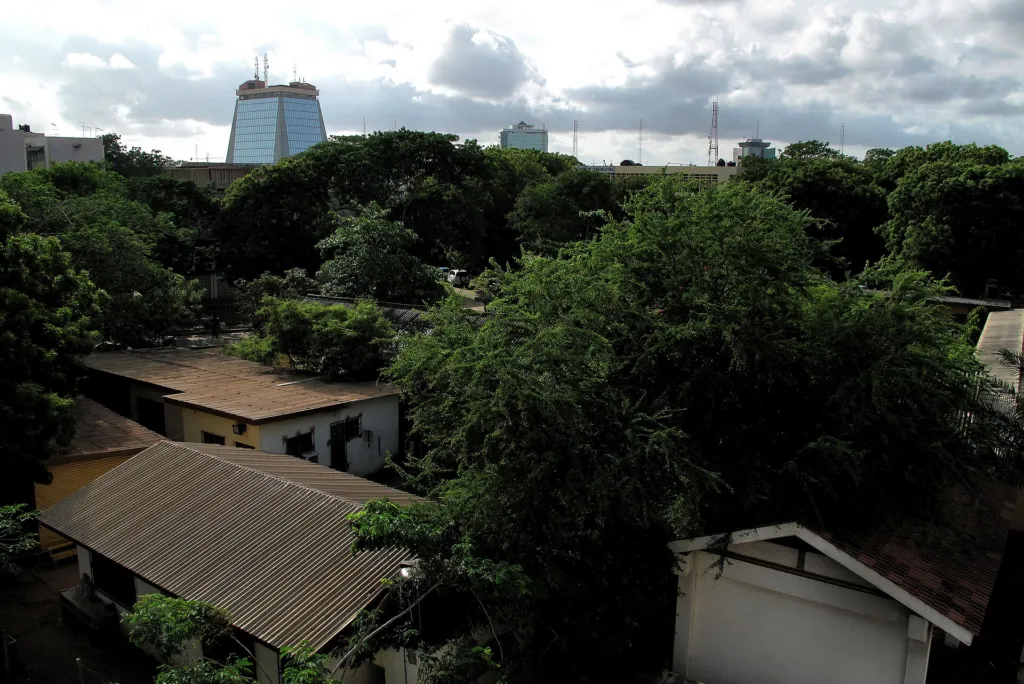
Top photo: Accra, where ECG serves millions of customers (file photo). Photo: Francisco Anzola, Wikimedia Commons, CC BY 2.0
