
Brown rivers, lost forests: why Ghana can’t stop galamsey
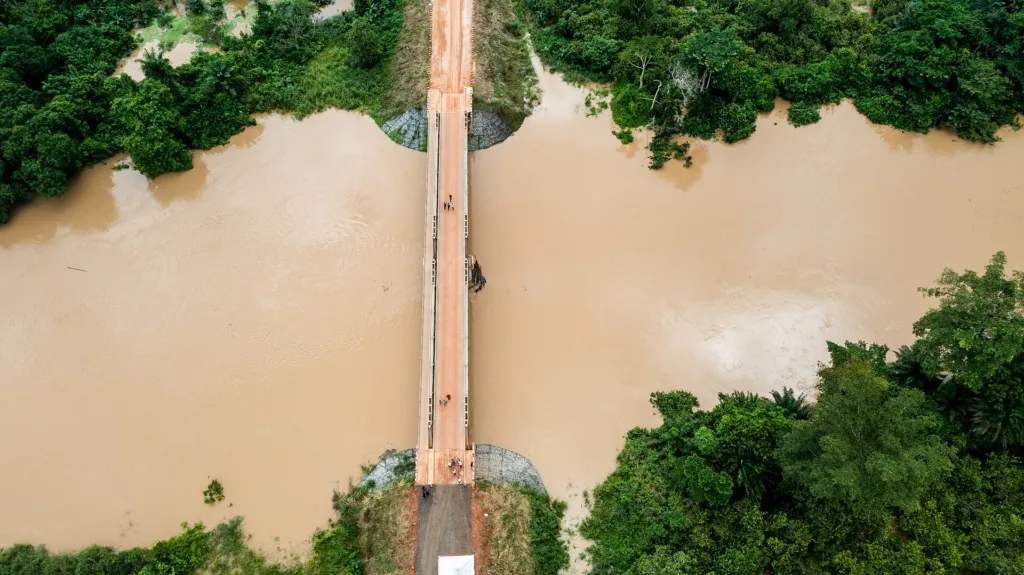
Few issues unite Ghanaians like galamsey. The word, derived from “gather them and sell”, describes illegal small-scale gold mining, and its damage can be seen from the air: rivers turned the colour of milky tea, forest reserves scarred with pits, and farmland left as barren mud.
The scale of the damage
When the government inaugurated its new National Anti-Illegal Mining Operations Secretariat (NAIMOS) in June 2025, Lands Minister Emmanuel Armah-Kofi Buah said about 16 percent of Ghana’s land had been destroyed by galamsey.
The pollution reaches far beyond mining sites. Major rivers such as the Pra, Ankobra, Offin and Birim, which supply drinking water to millions, have been heavily contaminated with silt and chemicals such as mercury, which miners use to extract gold. Water treatment plants have at times struggled to cope with the levels of mud in the water, and fishing communities and cocoa farmers have also suffered.
Why it keeps growing
- High gold prices. Gold has traded at record levels, making illegal mining extremely profitable.
- Jobs. For many young people in mining areas, galamsey pays far more than farming or other available work.
- Machinery. Small-scale mining has moved from shovels to excavators and Chinese-made “changfang” washing machines, multiplying the damage.
- Powerful backers. Investigations and campaigners have long alleged that politicians, chiefs and security officers protect illegal operations, regardless of party.
The government’s response
President John Dramani Mahama, who took office in January 2025, made the fight against galamsey a priority. His government created NAIMOS to coordinate enforcement, and in February 2026 Finance Minister Cassiel Ato Forson told Parliament that the Ghana Armed Forces would lead a nationwide campaign to clean up water bodies in designated mining areas, while NAIMOS stepped up operations in rivers, streams and forest reserves.
Enforcement teams have seized dozens of excavators and disabled mining equipment in raids across the Eastern, Ashanti and Western North regions.
Mahama has also cautioned that the fight is a gradual process rather than a quick fix, and has urged Parliament to give the secretariat a substantially larger budget.
The critics
Many Ghanaians say progress has been too slow. On World Environment Day in June, the Global Media Foundation said NAIMOS had initially inspired confidence but delivered little visible change, and called for a fight “free from political influence”, with accountability for everyone involved regardless of party or status.
Civil society groups, organised labour and church leaders have repeatedly pressed the government to go further, with some calling for a temporary ban on all small-scale mining while the sector is cleaned up.
Why it matters beyond Ghana
Ghana is Africa’s largest gold producer. How it balances the livelihoods of hundreds of thousands of small-scale miners with the protection of water, forests and farmland is a test faced by many mineral-rich countries, from Côte d’Ivoire and Mali to Tanzania and Zimbabwe.
Cleaner rivers and real prosecutions
- Whether river water quality measurably improves in the Pra, Ankobra and Birim basins.
- Prosecutions of financiers and officials, not just low-level miners.
- Reforms to licensed small-scale mining, so that legal mining becomes easier and cheaper than illegal mining.
- The budget allocation for NAIMOS and the reclamation of damaged land.
Sources: Citi Newsroom, 25 February 2026; News Ghana; Ghana Ministry of Lands and Natural Resources; Al Jazeera.
Top photo: A bridge over a river turned brown by illegal mining in Ghana, 2023 (file photo). Photo: Goldenwabbit, Wikimedia Commons, CC BY-SA 4.0
