
No public money: how Kenya’s $311 million power-line deal works
Africa has plenty of private power plants, but very few privately financed power lines. Kenya is trying to change that.
The Kenya Electricity Transmission Company (KETRACO) has signed a public-private partnership (PPP) with a consortium of Africa50, the pan-African infrastructure investor, and Power Grid Corporation of India (POWERGRID) to build two transmission projects worth $311 million (about KSh 40.4 billion). The deal was signed in December 2025, after a proposal first made in 2018 worked its way through Kenya’s PPP approval process.
What will be built
- Lessos to Loosuk: about 180 kilometres of 400-kilovolt line through Nandi, Elgeyo Marakwet, Baringo and Samburu counties, with a new substation at Lessos. It will help carry up to 300 MW of wind power from Lake Turkana and geothermal power from the North Rift.
- Kibos to Kakamega to Musaga: about 72 kilometres of 220-kilovolt line serving Kisumu, Vihiga and Kakamega, with new substations at Kakamega and Musaga. It extends the 220-kilovolt grid into Western Kenya for the first time.
How the deal works
- The private partners will design, finance, build, operate and maintain the lines for 30 years.
- KETRACO will make availability payments, meaning it pays only when the lines are working and available. Payments start only after independent certification that the work is complete.
- An independent expert will oversee delivery.
- At the end of the concession, the assets return to KETRACO.
- The project includes requirements to use Kenyan professionals, contractors and suppliers.
No public money is committed upfront. “The project’s financing structure reflects prudent fiscal management,” said Treasury Cabinet Secretary John Mbadi.
Power lost on a weak grid
Kenya produces much of its electricity from geothermal, hydro, wind and solar, but power is often lost or wasted because the grid cannot carry it to where it is needed. KETRACO plans about 8,000 kilometres of new lines over 20 years, which would cost roughly $5 billion. The government cannot fund that alone.
The hidden cost of PPPs
Critics of PPPs warn that availability payments are a long-term obligation, much like debt, even if they do not appear on the government’s balance sheet at first. If KETRACO’s finances weaken, it could struggle to pay. Transparency over contract terms is therefore essential.
Kenya’s experience with a proposed deal with India’s Adani Group, cancelled in 2024 after public outcry and a court challenge, shows how sensitive private involvement in the grid can be.
Financial close and the contract terms
- Financial close and the start of construction.
- Whether other African countries copy the model.
- Publication of contract terms and payment obligations.
Sources: Africa50, December 2025; KETRACO; African Business, February 2026; ESI-Africa.
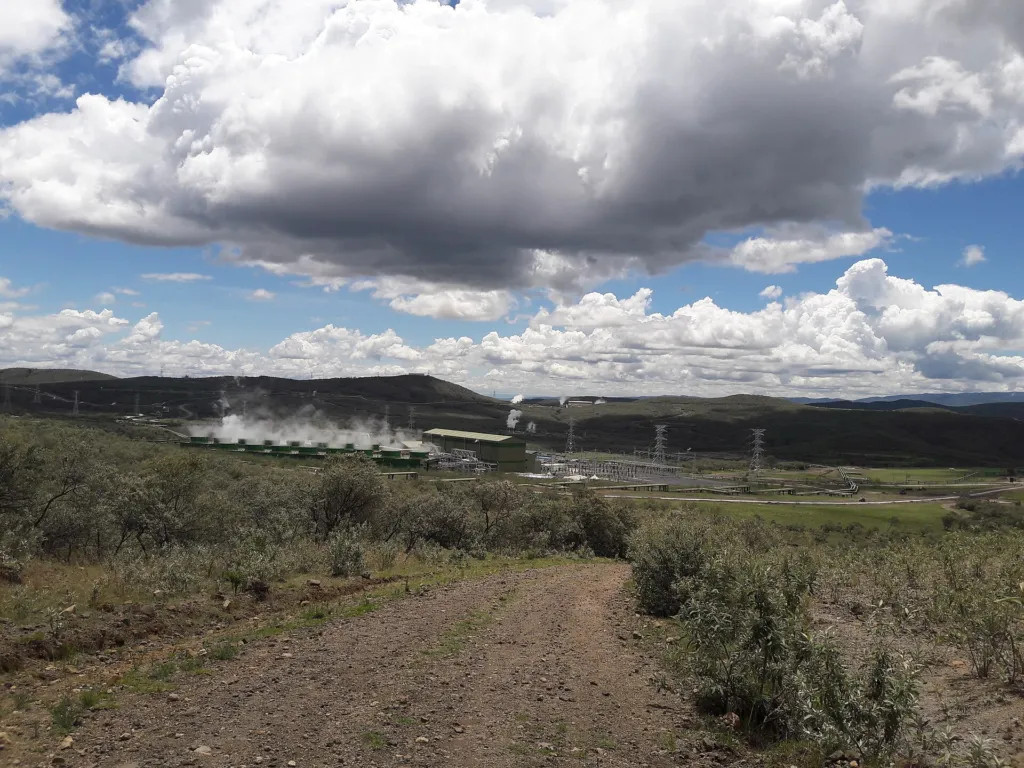
Top photo: Olkaria V geothermal power station in Hell’s Gate National Park (file photo). Photo: Macabe5387, Wikimedia Commons, CC BY-SA 4.0
