
Kenya shelves its power price hike, but your bill can still rise
Kenyan households and businesses were spared a big electricity price increase this year, at least for now. In June, Energy and Petroleum Cabinet Secretary Opiyo Wandayi announced that the government had withdrawn Kenya Power’s application to raise base electricity tariffs.
That has not kept bills still. In September, the energy regulator changed how households are grouped for billing, and the charges added to bills every month have stayed high.
What was proposed
Kenya Power (KPLC) filed the application on 31 March on behalf of the wider energy sector, including the generator KenGen, the transmission company KETRACO, the Geothermal Development Company and the rural electrification agency REREC. The proposed increases, of up to 31.8 percent, would have applied from July 2026 to June 2029.
Among the proposals:
- Cutting the subsidised “lifeline” band, for households using little electricity, from 100 kilowatt-hours (kWh) a month to 30 kWh.
- Raising the lifeline rate from KSh 12.23 to KSh 14 per kWh.
- Raising the ordinary domestic rate from KSh 16.45 to KSh 21.68 per kWh.
The energy regulator, EPRA, had scheduled public hearings across several counties from May, then postponed them.
A politically sensitive bill
Electricity prices are politically sensitive in Kenya. High living costs fuelled the 2024 youth-led protests over the Finance Bill, and the next general election is due in 2027.
What changed in September
A gazette notice dated 18 September 2026 regrouped domestic customers into three bands, based on how much electricity they use each month:
- DC1 (lifeline): up to 30 kWh.
- DC2: above 30 kWh and up to 100 kWh.
- DC3: above 100 kWh, up to 15,000 kWh.
Each household’s band is set by its average use over three months, including the current billing cycle, and customers are moved between bands automatically. The price per unit in each band did not change, but a household whose average use crosses a threshold is billed at a different band’s rate. Small businesses are grouped on the same thresholds.
The Electricity Consumer Society of Kenya has objected that the notice merged earlier bands, and an engineer has said he will sue EPRA and Kenya Power over the change.
Bills can still change
The freeze applies only to the base energy charge. Other charges on Kenyan bills are reset every month by EPRA, including:
- The fuel energy cost charge, which reflects the cost of running diesel power plants.
- The foreign exchange adjustment, which reflects changes in the shilling’s value against the dollar.
- Water levies and VAT.
These charges remain a big part of the bill. For September meter readings they added about KSh 4.16 per kWh, including a fuel charge of KSh 3.00. In October, EPRA set the fuel charge at KSh 3.22 per kWh and the forex charge at 87 cents. A drought that reduces hydropower, or a weaker shilling, would push these charges up.
The utility’s dilemma
Kenya Power argued that higher tariffs were needed to pay for maintenance, new connections and grid upgrades. Without them, the sector must find money elsewhere, including through private investment. In December 2025, KETRACO signed a $311 million privately financed deal to build new transmission lines, a model the government plans to expand.
What to watch
- Whether Kenya Power files a new tariff application, which would require a full new review and public hearings.
- Monthly fuel and forex charges in EPRA’s gazette notices.
- Kenya Power’s financial results and investment plans.
Sources: Kenyan Wall Street, 5 June 2026; Kenyans.co.ke, 20 September 2026; Kenyans.co.ke, 29 September 2026; Streamline Feed (gazette notice of 18 September 2026); allAfrica, 12 October 2026; EPRA; Kenya Power newsroom.
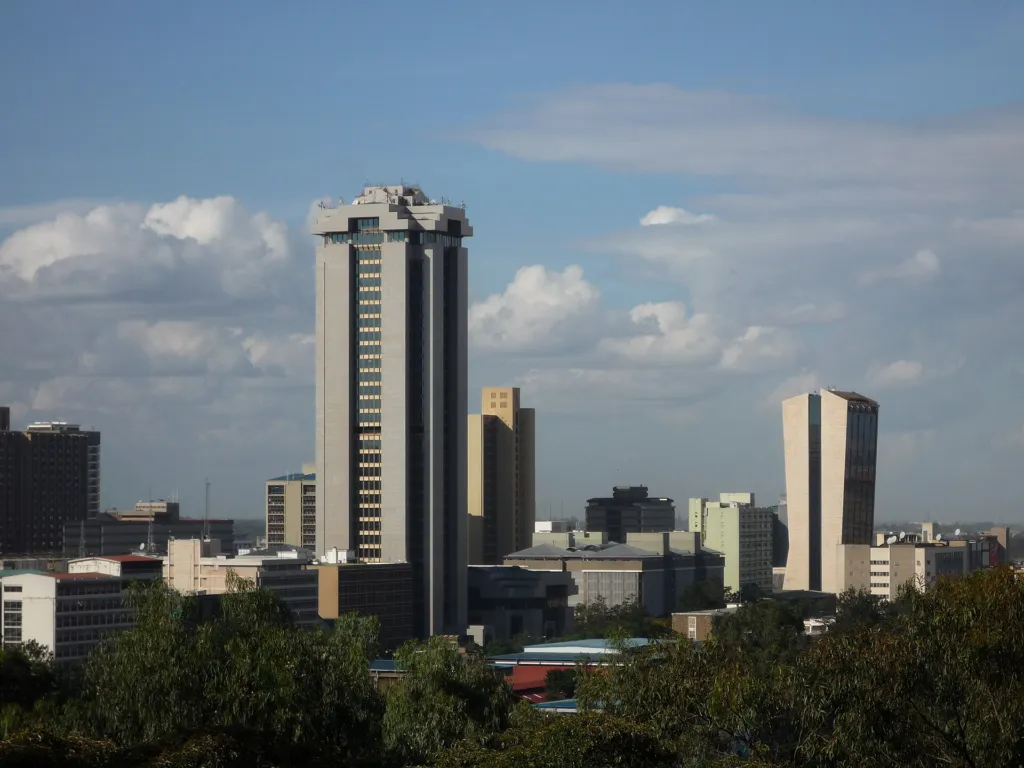
Top photo: The Nairobi skyline from Upper Hill (file photo). Photo: Lmwangi, Wikimedia Commons, CC BY-SA 3.0
