
Thousands march in Tunis as UGTT union challenges Saied over prices and freedoms
More than 3,000 people marched through central Tunis on 17 October in one of the largest protests against President Kais Saied in recent years, according to an AFP count.
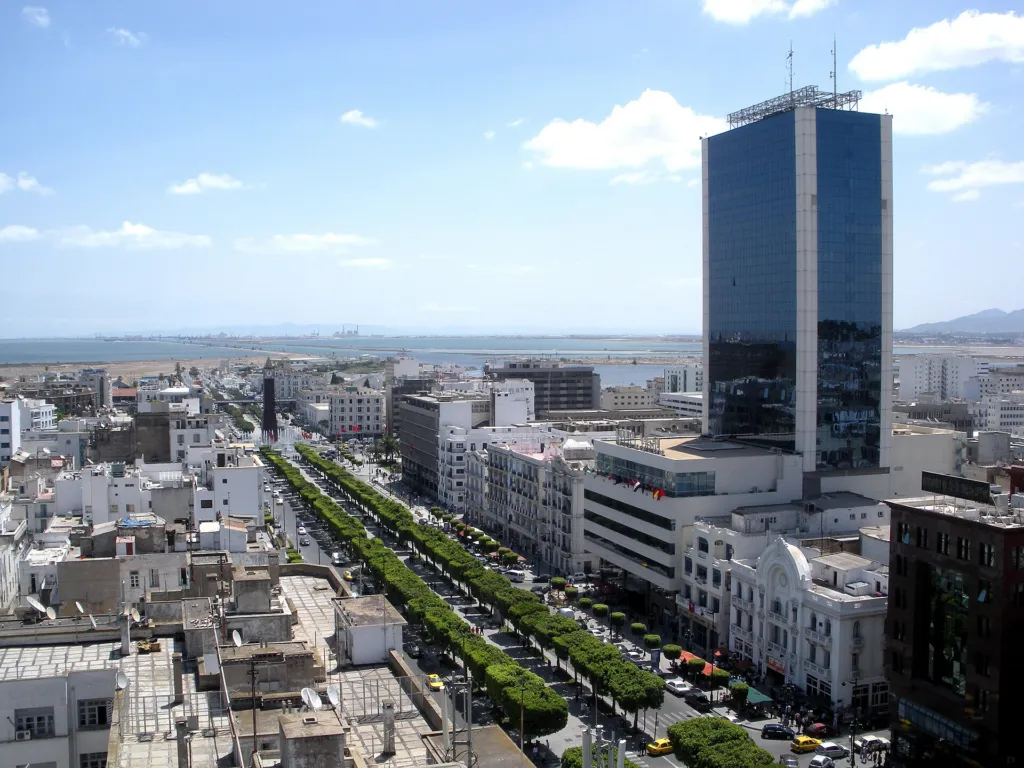
The demonstration, on Habib Bourguiba Avenue, the capital’s main boulevard and the scene of the 2011 revolution, was called by nine national organisations, including the Tunisian General Labour Union (UGTT), the country’s most powerful civil society organisation.
What protesters want
Marchers chanted “No democracy without freedoms” and “No dignity with poverty”. Their grievances combined economic and political complaints:
- The cost of living. Prices of basic goods have risen sharply, and wages have not kept pace.
- Shortages. Tunisians have faced repeated shortages of staples such as flour, sugar, coffee and medicines.
- Public services. Water and power cuts have become more frequent, especially in summer.
- Political prisoners. Dozens of opposition politicians, lawyers, journalists and activists have been jailed in recent years, many under a decree on “false news” or on conspiracy charges.
UGTT Secretary-General Salah Eddine Salmi told the crowd that “silence will no longer be acceptable”.
How Tunisia got here
Tunisia was long seen as the one success story of the Arab Spring. That changed in July 2021, when Saied, a former law professor elected in 2019, suspended parliament and dismissed the government. He then ruled by decree and introduced a new constitution in 2022 that greatly expanded presidential powers. He was re-elected in October 2024 in a vote with low turnout, after several leading challengers were disqualified or jailed.
Saied says he is fighting corruption and “traitors” and defending national sovereignty. He rejected the terms of a $1.9 billion IMF loan in 2023, calling them foreign “diktats”, and has relied instead on domestic borrowing from the central bank and on support from partners such as Algeria and the Gulf states.
The union’s role
The UGTT, which has about a million members, helped bring Tunisia through its post-revolution crisis and shared the 2015 Nobel Peace Prize as part of the national dialogue quartet. It initially took a cautious line towards Saied’s 2021 power grab, but relations have since worsened, with officials accusing the government of ignoring social dialogue and targeting union leaders.
The October march followed an earlier protest in August and a strike by fuel transport workers, signs that the union is becoming more confrontational.
What to watch
- Whether the UGTT calls a general strike, which would be a major escalation.
- The government’s response, including any arrests of union figures.
- Shortages and prices ahead of winter.
- Tunisia’s debt payments in 2027 and whether it returns to talks with the IMF.
Clarification, 29 October 2026: an earlier version of this story said the UGTT led the march. It was called jointly by nine national organisations, including the UGTT.
Sources: AFP via Barron’s and France 24, 17 October 2026; Business News, 29 September 2026; Reuters; Human Rights Watch; Amnesty International.
Top photo: Avenue Habib Bourguiba in central Tunis (file photo). Photo: Dacoslett, Wikimedia Commons, CC0
