
Why the EU froze €18 million in aid to Sierra Leone
The European Union has suspended €18 million ($21 million) in budget support to Sierra Leone this year, and a further €22.5 million promised for next year could also be withheld. According to the Dutch government, the reason is a single man: one of Europe’s most-wanted drug traffickers.
Sierra Leone’s government disputes that account. The row is now a test of how far donors are willing to tie aid to cooperation on crime.
The fugitive at the centre of the dispute
Jos Leijdekkers, a Dutch national, was sentenced in his absence in the Netherlands to 24 years in prison for smuggling more than seven tonnes of cocaine. Courts in Belgium have handed him sentences totalling about 100 years across several cases. Dutch police also allege he laundered tens of millions of euros.
Reuters reported in January 2025 that Leijdekkers was living in Sierra Leone, possibly since 2023, and enjoying high-level protection there. The Netherlands has requested his extradition, but says Sierra Leone has so far refused to cooperate.
What the Netherlands says
Announcing the suspension on 1 October, Dutch Justice Minister David van Weel said the funds were being withheld to pressure Freetown to act against Leijdekkers. He claimed the trafficker earns “hundreds of millions of euros per month”, a figure that has not been independently verified.
The suspended money is EU budget support, which goes directly into a government’s budget rather than to specific projects. That makes it especially valuable to a country like Sierra Leone, which relies on outside financing to pay for public services.
What Sierra Leone says
Sierra Leone’s Information Minister, Chernor Bah, denied that the decision was punitive or linked to any individual. He said the delay stemmed from procedural issues with an amended financing agreement, and that the European Commission had proposed shifting the disbursements to 2027 and 2028.
According to Bah, reports framing the move as a sanction over Leijdekkers do not match the reasons formally communicated to his government. The European Commission had not publicly commented at the time the suspension was reported.
Why it matters beyond one case
West Africa has become a major transit route for cocaine moving from South America to Europe. Weak border controls, long coastlines and the corrupting power of drug money have worried governments and regional bodies for years. Analysts warn that trafficking networks can buy protection from officials and distort politics in small states.
The dispute also raises a wider question about aid. Budget support is usually tied to economic reforms and public finance management. Linking it openly to an extradition request would be an unusual step, and some development experts warn that withholding funds can hurt ordinary citizens more than the officials involved.
For Sierra Leone, the stakes are high. Losing up to €40 million over two years would put pressure on a budget already stretched by high living costs.
What to watch
- Whether Sierra Leone moves on the Dutch extradition request, or provides more information about Leijdekkers’ whereabouts.
- Whether the European Commission confirms the reasons for the suspension, and whether the €22.5 million planned for next year is also frozen.
- Whether other European countries follow the Dutch lead in linking aid to cooperation on organised crime.
Sources: Reuters via TimesLIVE, 1 October 2026; OkayAfrica, 2 October 2026; OCCRP; DutchNews.
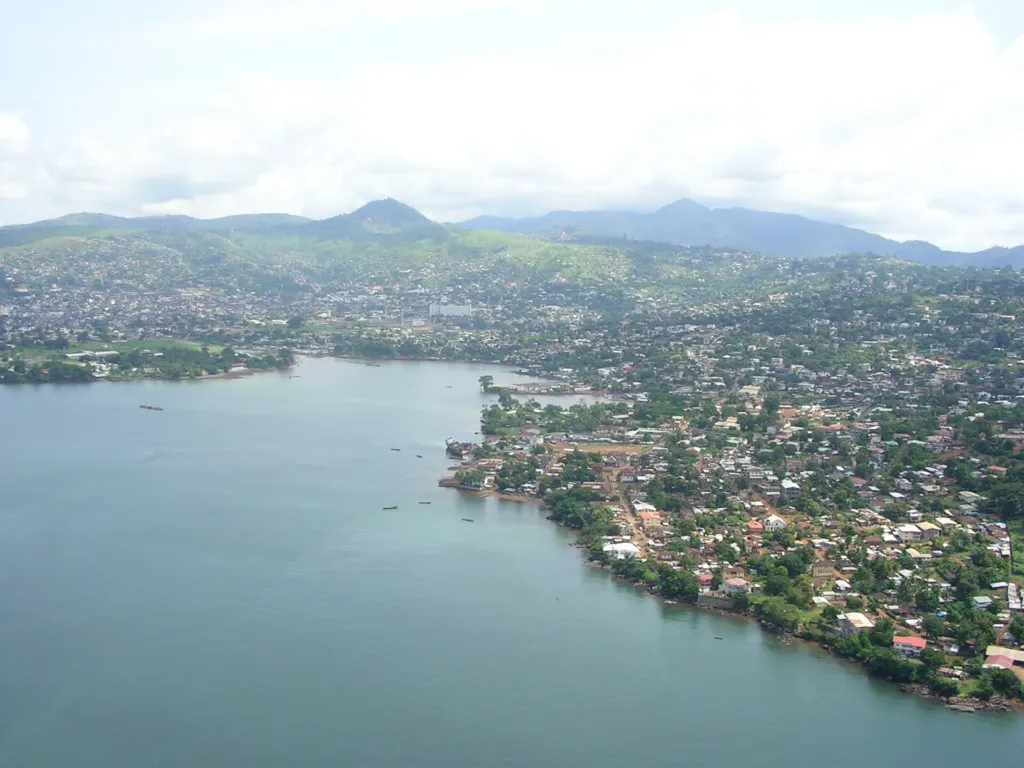
Top photo: Aerial view of Freetown, Sierra Leone (file photo, 2004). Photo: David Hond, Wikimedia Commons, CC BY 2.0
