
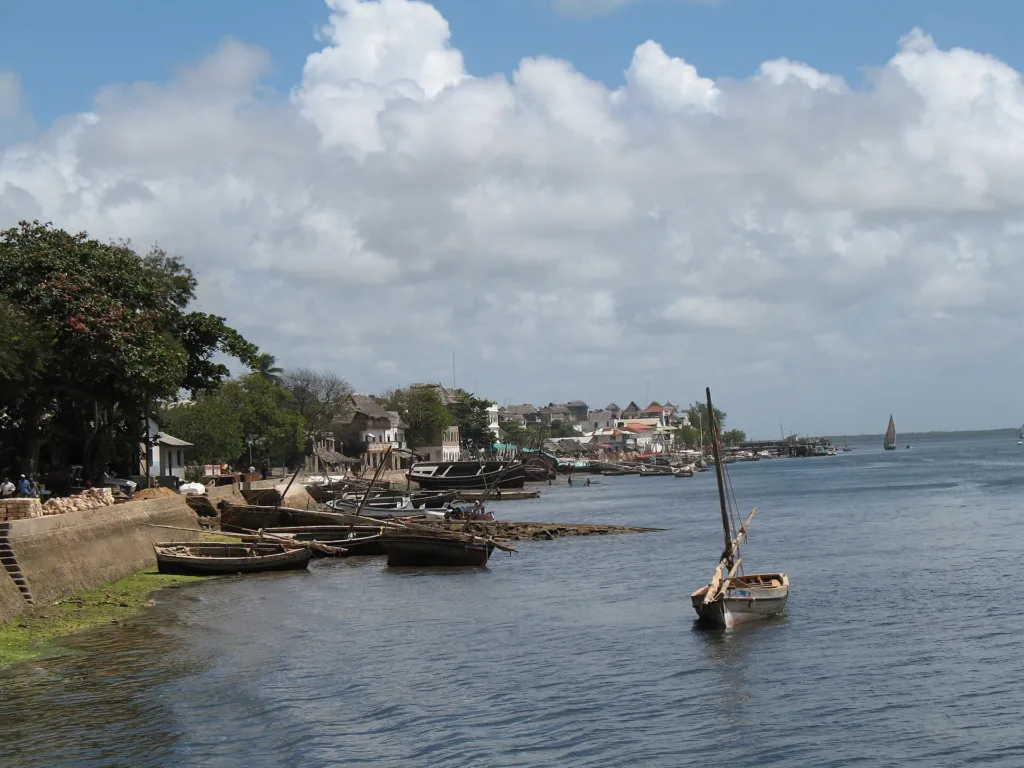
Dangote’s next $16 billion bet: a giant refinery on Kenya’s coast
Aliko Dangote, Africa’s richest man, has broken ground on a $16 billion oil refinery in Lamu, on Kenya’s Indian Ocean coast. If it is built as planned, it would be one of the largest refineries in the world and could change how East Africa gets its fuel.
The ceremony on 30 September was attended by Kenyan President William Ruto, Ethiopian Prime Minister Abiy Ahmed and Ugandan President Yoweri Museveni, a sign of how much regional hope is riding on the project.
The plan
According to Dangote, the Lamu refinery will:
- Process 700,000 barrels of crude oil a day, more than any refinery in Europe.
- Cost about $16 billion.
- Take 30 to 40 months to build. Dangote spoke of 30 months at the ground-breaking; later reports put it at 40, with the plant ready by 2030.
- Include a 1,000-megawatt power plant, with half of its electricity going to Kenya’s national grid.
The site sits beside a deepwater port being built at Lamu as part of a long-planned transport corridor linking Kenya with South Sudan and Ethiopia. Dangote has also said the East African refinery would eventually list on the Nairobi Securities Exchange, though he has not given a date.
Why East Africa wants it
Kenya imports all of its refined petroleum. That leaves drivers, farmers and businesses exposed to world oil prices and shipping costs. In October, petrol in Kenya averaged about KSh228 a litre and diesel about KSh229, both up sharply in a single month. Transport costs rose 17 percent from a year earlier, the biggest driver of an inflation rate that reached 7.3 percent, its highest in more than three years.
A large regional refinery could reduce import bills, save foreign currency and create jobs, both in construction and in the businesses that would supply the plant. Uganda and Ethiopia, both landlocked and both large fuel importers, could also benefit.
The Nigerian precedent
Dangote’s confidence comes from Lagos. His refinery at Lekki, which began production in 2024, reached its full capacity of 650,000 barrels a day earlier this year. It has helped turn Nigeria from an importer of petrol and diesel into an exporter, and Dangote is now selling shares in it to the public.
The Lekki project also showed how hard such ventures are. It took years longer than planned, cost far more than first budgeted and involved repeated disputes over crude supply and fuel pricing.
The legal challenges
The project has already faced several legal challenges, with mixed results so far:
- Landowners. 133 residents of Chandavai have sued in the Environment and Land Court in Malindi, saying the site is their ancestral land. A temporary freeze on the project was lifted on 14 October because the petition cited the wrong parcel of land. An amended case is due to be heard on 24 November.
- Transparency. The Consumers Federation of Kenya (COFEK) asked the government’s Public Private Partnerships Petition Committee to force disclosure of the deal’s terms. On 30 October the committee dismissed the petition, finding that COFEK had not shown the refinery is a public-private partnership. The ruling record describes a project “with no concession term, no handback, no reversion of the Project to the State”.
- Public money. A separate High Court case brought by activist Francis Awino seeks disclosure of any public money, land, tax incentives and guarantees involved. It is listed for mention on 12 November.
Dangote dismissed the cases at the ground-breaking, saying “there’s actually no problem with these sort of cases.” Dangote has offered East African governments a combined 30 percent stake. Kenya is weighing a 10 percent share, valued at about $500 million, but how much it will take, and how it would pay, has not been made public. Treasury Cabinet Secretary John Mbadi told the petition committee that the refinery is “a private commercial investment” and that there is no plan to transfer it to the state.
What to watch
- Transparency. The financing structure and the Kenyan government’s role have not been published in full, and a High Court case is seeking their disclosure.
- Land and community rights in Lamu, which has a history of disputes over large infrastructure projects, starting with the landowners’ hearing on 24 November.
- The timeline. Even 40 months would be fast by industry standards. Lekki took about a decade from announcement to full output.
- Crude supply. Kenya does not yet produce significant oil, so the refinery will depend on imported or regional crude.
If it works, Lamu could do for East Africa what Lekki is doing for Nigeria. Getting there will take more than a ground-breaking ceremony.
Sources: Eyewitness News/AFP, 30 September 2026; Business Daily Africa; OkayAfrica, 2 October 2026; Rio Times, September 2026; Rio Times, on the 30 October ruling; Kenyans.co.ke (KNBS data), October 2026; AP via Business Day, 14 September 2026; Billionaires.Africa, 31 October 2026.
Top photo: Lamu town on Lamu Island, Kenya (file photo, 2007). Photo: Magnus Kjaergaard, Wikimedia Commons, CC BY 3.0
