
Algeria sent fighter jets to save Niger’s junta. Now its troops are moving in
Algeria’s President Abdelmadjid Tebboune has confirmed that his country sent fighter jets to Niger in August to help the military government there defeat an attempted coup. The deployment is one of the boldest moves by Algeria beyond its borders in decades, and a sign of how worried Algiers has become about instability on its southern frontier. In late October, Algeria went further and approved its first deployment of ground troops abroad since 1973.
What happened in Niamey
Overnight from 28 to 29 August, gunfire and explosions were heard in Niger’s capital, Niamey. According to Niger’s Defence Minister, General Salifou Modi, a group of soldiers tried to detain colleagues at Air Base 101, near Diori Hamani International Airport, and opened fire on strategic locations, including the state broadcaster and the presidential palace. Security forces regained control.
Niger’s military government later accused France of orchestrating the mutiny. France denied any involvement.
Algeria’s role
On 30 August, Algeria’s defence ministry said it had sent aircraft to Niger at the request of the Nigerien authorities, on “a mission to support the Nigerien army in confronting an attempt to destabilise the brotherly state of Niger”. The ministry said Sukhoi Su-30 fighters landed at Niamey airport, accompanied by an air-to-air refuelling plane.
In a television interview broadcast on 3 October, Tebboune confirmed the deployment and said some parties had “gone too far”, without naming them. He added: “For obvious reasons, this is a provocation against us … and I too will send planes and we’ll meet head-on.”
The timing was striking. Niger’s Prime Minister, Ali Mahaman Lamine Zeine, had been in Algeria for talks on 26 and 27 August and, according to Tebboune, returned home the night before the mutiny.
From jets to troops
On 21 October the two countries signed a military cooperation protocol, whose details were not published. Four days later, Algeria’s upper house, the Council of the Nation, unanimously approved sending troops to Niger, Al Jazeera reported. The constitution lets the president send units abroad only with a two-thirds vote in both chambers, and this is Algeria’s first such mission since the 1973 Arab-Israeli war.
Algeria says the troops will protect “shared energy and economic interests”. A military convoy reportedly reached the uranium-mining town of Arlit on 30 October, and about 50 fuel tankers reached Agadez the next day under joint Algerian-Nigerien escort, according to the Soufan Center. Troop numbers and the length of the mission have not been disclosed.
Why Algeria cares so much
Algeria shares a long desert border with Niger, as well as with Mali and Libya. For Algiers, the stability of the Sahel is a matter of national security: armed groups, smuggling networks and migrants all move across these frontiers.
Algeria has long opposed foreign military intervention in the region. In 2023, after soldiers overthrew Niger’s elected president, Mohamed Bazoum, Algeria warned the West African bloc ECOWAS against using force to reverse the coup.
That position has now evolved. Rather than simply opposing intervention by others, Algeria has shown that it is willing to act itself, at least in support of a government that asks for help.
A crowded field
The Sahel has become an arena for competing outside powers. After breaking with France, the military governments of Niger, Mali and Burkina Faso turned to Russia for security support and formed their own Alliance of Sahel States. Turkey, the Gulf states and others have also expanded their presence.
Algeria’s relations with its neighbours have not always been smooth. Its ties with Mali’s junta have been tense, and relations with Morocco remain broken. A deeper security partnership with Niger gives Algiers a stronger foothold in a region where it has often felt sidelined.
What to watch
- How long Algerian troops stay in Niger, and whether they come under attack from armed groups such as JNIM and Islamic State Sahel Province.
- How Russia, France and the Sahel alliance respond to Algeria’s more assertive role.
- Stability within Niger’s own armed forces after the attempted mutiny.
Sources: Al Jazeera, 3 October 2026; Algerian Ministry of Defence statement, 30 August 2026; APS; Al Jazeera, 25 October 2026; Soufan Center, 3 November 2026.
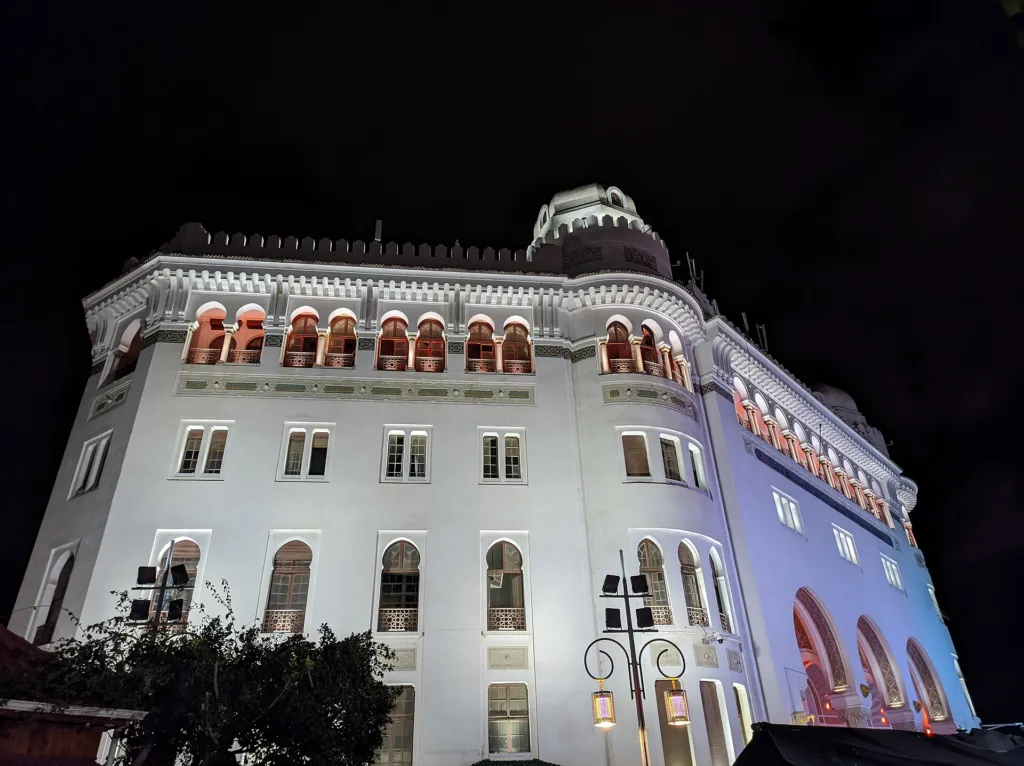
Top photo: The Grand Post Office in Algiers (file photo, 2022). Photo: Muhammed Amine Benloulou, Wikimedia Commons, CC BY-SA 4.0
