
DR Congo’s Ebola outbreak is now its deadliest on record
The Ebola outbreak in the Democratic Republic of Congo has become the deadliest in the country’s history, and one of the worst the world has seen.
Government figures published at the start of October recorded 4,018 deaths among 8,300 confirmed cases across seven provinces. By mid-October, the regional total had passed 9,000 infections and 4,300 deaths. Only the 2014–2016 West African epidemic, which killed more than 11,000 people, has been larger, and the World Health Organization has warned that this outbreak is on track to surpass it.
Where it started and where it is going
Congo declared the outbreak, its 17th since the virus was first identified there in 1976, on 15 May. It began in Ituri province in the north-east. Transmission there appears to be slowing, but the virus is now spreading quickly in North Kivu, and South Ubangi in the north-west became the seventh province to declare cases in September.
The outbreak has also crossed borders. Kenya and Nigeria have each confirmed cases linked to travel from the region, and Uganda has ordered quarantine for students arriving from Congo.
Why it is so hard to control
The strain. This outbreak is caused by the Bundibugyo strain. The vaccines and antibody treatments that helped end recent Congolese outbreaks were developed mainly for the Zaire strain, so responders have fewer tools.
Conflict. Eastern Congo is one of the most insecure regions in the world. Large areas of North Kivu are controlled by the AFC/M23 rebel alliance, and other armed groups operate across Ituri. Six new cases were recently recorded in rebel-held areas of North Kivu, in the Kayna and Alimbongo health zones, all traced to a single chain of transmission from government-held Butembo. Reaching patients and contacts across front lines requires cooperation that is often absent.
Displacement. Millions of people have been forced from their homes by fighting. The UN refugee agency has confirmed 88 cases and 56 deaths in displacement sites, and believes the real toll is higher. The International Organization for Migration says fatality rates in camps often exceed 80 percent, compared with about 50 percent overall.
Trust. Violence can undo months of work. In Ituri, thousands fled the Kigonze camp, which once housed about 19,000 people, after soldiers entered searching for weapons. An Ebola transit centre there was burned. Officials estimate about 1,000 Ebola contacts lived in the camp, but only around a fifth have been traced.
Some good news
More than 2,000 patients have recovered. Health workers, many of them Congolese veterans of earlier outbreaks, continue to run treatment centres, trace contacts and organise safe burials under extremely difficult conditions.
What it will take
Public health experts say the outbreak will only be brought under control with:
- Safe access for health teams in conflict zones, including areas held by armed groups.
- More funding for treatment centres, protective equipment and health worker pay.
- Faster development and deployment of vaccines and treatments for the Bundibugyo strain.
- Community trust, built by local leaders and health workers rather than armed escorts.
The WHO has described the epidemic as “far from over”. With the virus now moving along trade and travel routes out of eastern Congo, its course matters for the whole continent.
Sources: DR Congo government figures via OkayAfrica, 2 October 2026; Al Jazeera, 6 October 2026; NPR/AP, 20 October 2026; UNHCR; IOM.
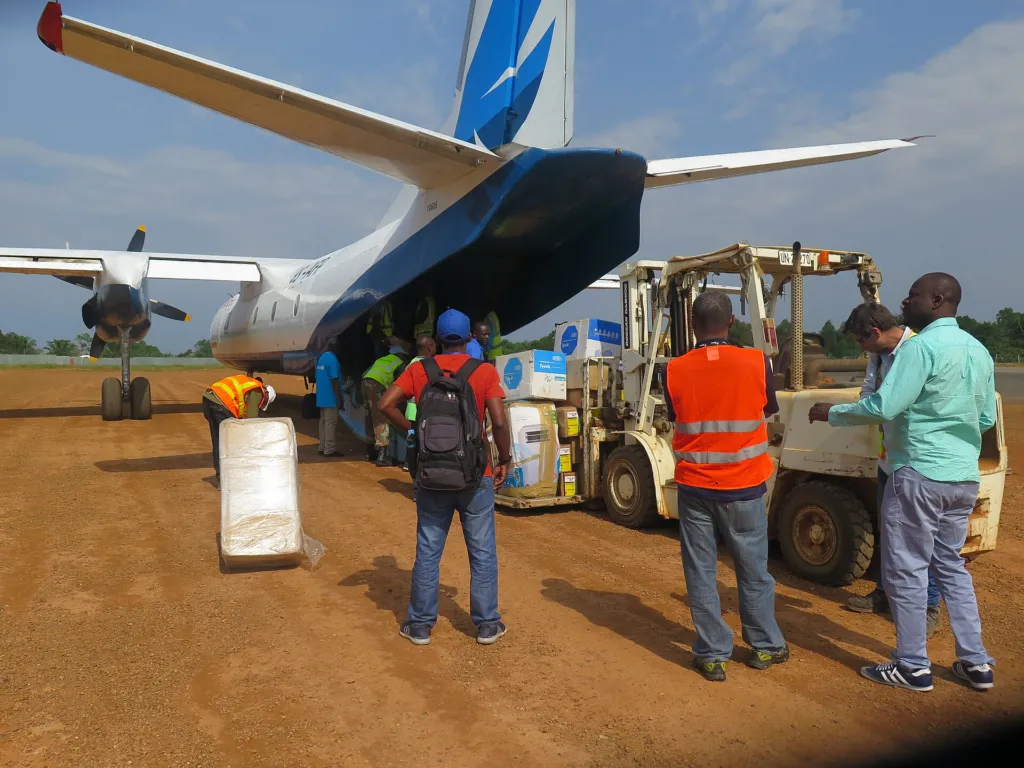
Top photo: Medical supplies being unloaded in Beni, North Kivu, during an earlier Ebola outbreak in 2018 (file photo). Photo: MONUSCO, Wikimedia Commons, CC BY-SA 2.0
