
Ghana opens 5G to competition as MTN pays $202m and Telecel targets December launch
Ghana’s mobile operators are preparing to roll out fifth-generation (5G) networks of their own after the country abandoned a model that gave one company the exclusive right to build 5G infrastructure. MTN Ghana told the Ghana Stock Exchange on 2 October that it had won spectrum worth $202m, while state-part-owned Telecel Ghana says it plans to launch commercial 5G on its own network in December.
The awards end a two-year experiment in which Next-Gen InfraCo (NGIC), a state-backed company working with a subsidiary of India’s Reliance Industries, was to build a shared 5G network that all operators would rent.
How the 5G licences were awarded
The National Communications Authority (NCA), the telecoms regulator, ran a competitive licensing process for spectrum in the 700 megahertz (MHz), 2.3 gigahertz (GHz) and 3 GHz bands.
- MTN Ghana. It won two 20 MHz lots in the 700 MHz band for $100.9m and 150 MHz in the 3 GHz band for $101.1m, on 15-year licences. The company said the payments were already included in its cash-flow outlook.
- Telecel Ghana. It applied for and received three lots in the 2.3 GHz band, announced in mid-September. Its price was not made public.
MTN said that “following the issuance of the spectrum licences, the Company will deploy the 5G spectrum in addition to its existing spectrum stock”, in a statement reported by Citi Newsroom.
The NGIC wholesale model
NGIC received a 10-year licence in May 2024 and Ghana’s first 5G service went live under the wholesale model in March 2026. But the company had completed only 16 of the 50 sites it was required to build in Accra and Kumasi. The NCA removed its exclusive rights with effect from 15 July, although NGIC keeps the rest of its licence, including its spectrum.
Samuel Nartey George, the communications minister, had said spectrum would go first to operators with credible plans to extend coverage to underserved and rural areas, according to ITWeb.
What the licences demand
The conditions, as reported by The Rio Times, are demanding:
- Coverage. All licensees must cover 70% of the population with outdoor mobile broadband by 6 March 2027, including every regional and district capital.
- Speeds. A minimum download speed of 7 megabits per second at the edge of each cell, rising over time.
- Extra duties for MTN. As the dominant operator, MTN paid floor prices 40% higher than rivals, must reach 80% of the rural population within five years and must offer national roaming to other operators at regulated prices.
How the operators reacted
Komla Buami, Telecel Ghana’s director of external affairs, told Joy Business: “This award is an important step in our preparations for the rollout of 5G.” He added that the company looked forward to “continued engagement with the Authority on spectrum rationalisation”, saying: “A well-planned spectrum framework will support network investment, improve service quality and provide the capacity required to meet the country’s growing demand for mobile services.”
A heavy spectrum bill
The cost is significant. The Rio Times calculated that MTN’s spectrum bill equals about 16% of the service revenue it and its mobile-money affiliate earned in the first half of 2026, at a time when the cedi lost 8.6% against the dollar. The NCA’s own timetable for issuing licences by 28 September also slipped.
Will Telecel launch in December?
- Whether Telecel switches on commercial 5G in December as promised.
- When the NCA formally issues MTN’s licences and fixes an effective date.
- How NGIC, which still holds spectrum, responds to the loss of its exclusivity.
- Progress towards the March 2027 coverage deadline outside Accra and Kumasi.
Sources: Citi Newsroom, 5 October 2026; MyJoyOnline, 17 September 2026; Graphic Online, 16 September 2026; The Rio Times, 6 October 2026; Technext, 2 October 2026; ITWeb, 9 July 2026; Further Africa, 7 October 2026
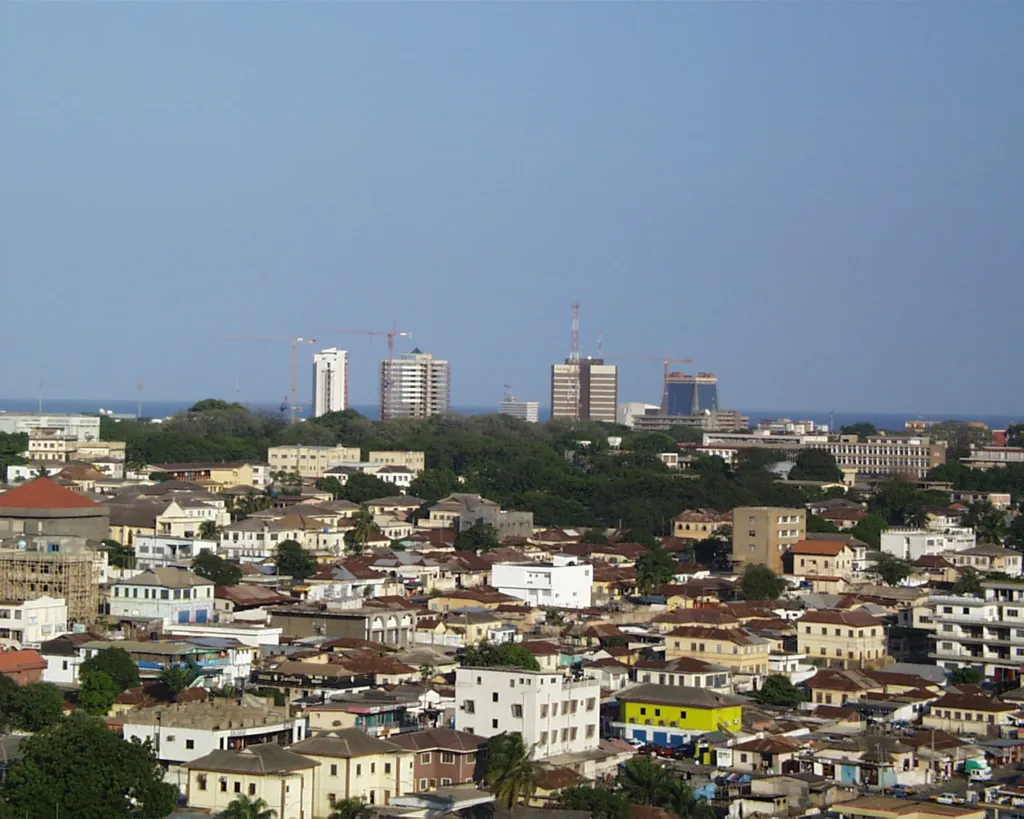
Top photo: Accra’s skyline (file photo). Photo: Elegant Machines, Wikimedia Commons, CC BY-SA 2.0
