
Ghana’s AI plan: a national strategy, a $250 million compute centre and a 24-month deadline
Ghana wants to build artificial intelligence, not just use it. Over the past six months, the government has launched a national AI strategy, approved $250 million for computing infrastructure, and set a target of two years to complete the first phase of a national AI facility.
What Mahama launched in April
President John Dramani Mahama launched the National AI Strategy in Accra on 24 April. He said Ghana should be “not a passive consumer of emerging technologies” but a country that designs, governs and deploys AI, and that AI should support human work rather than replace it.
Communications Minister Samuel Nartey George described four pillars:
- Ethical AI.
- Strong data governance.
- Infrastructure expansion.
- Workforce readiness.
Priority sectors include education, health, agriculture, finance and public services. The Ghana Revenue Authority is already using AI to improve tax collection, and ministries are introducing performance indicators to track AI adoption. Speaker of Parliament Alban Bagbin promised legislation on AI.
UNESCO’s representative in Ghana, Edmond Moukala, urged that AI systems should work in local languages such as Twi, Ga, Ewe and Dagbani.
The money
In June, the minister said Cabinet had approved $250 million for national computing infrastructure and AI applications. The aim is to give innovators and universities affordable access to high-performance computing, which is expensive and scarce across Africa.
The plan also includes a government-backed revolving fund to attract private investors, and regulatory “sandboxes” where fintech, health and agriculture start-ups can test products under supervision.
The deadline
In October, officials said the first phase of the national AI facility should be completed within 24 months. Details of its location, capacity and partners have not yet been published.
The conditions for success
Analysts point to several conditions for success:
- Reliable electricity, since AI computing uses large amounts of power.
- Fast, affordable internet.
- Skilled people, supported by the government’s One Million Coders Programme.
- Clear rules on data protection and accountability, involving the Data Protection Commission and the Cyber Security Authority.
Where the AI facility goes, and who builds it
- Publication of the facility’s location, partners and budget.
- AI legislation in Parliament.
- Whether Ghanaian start-ups and universities actually gain access to the new computing power.
Sources: Ministry of Communications, Digital Technology and Innovations, 24 April 2026; TechAfrica News, 1 April and 16 June 2026; Ghanamma/Adom FM, 22 October 2026.
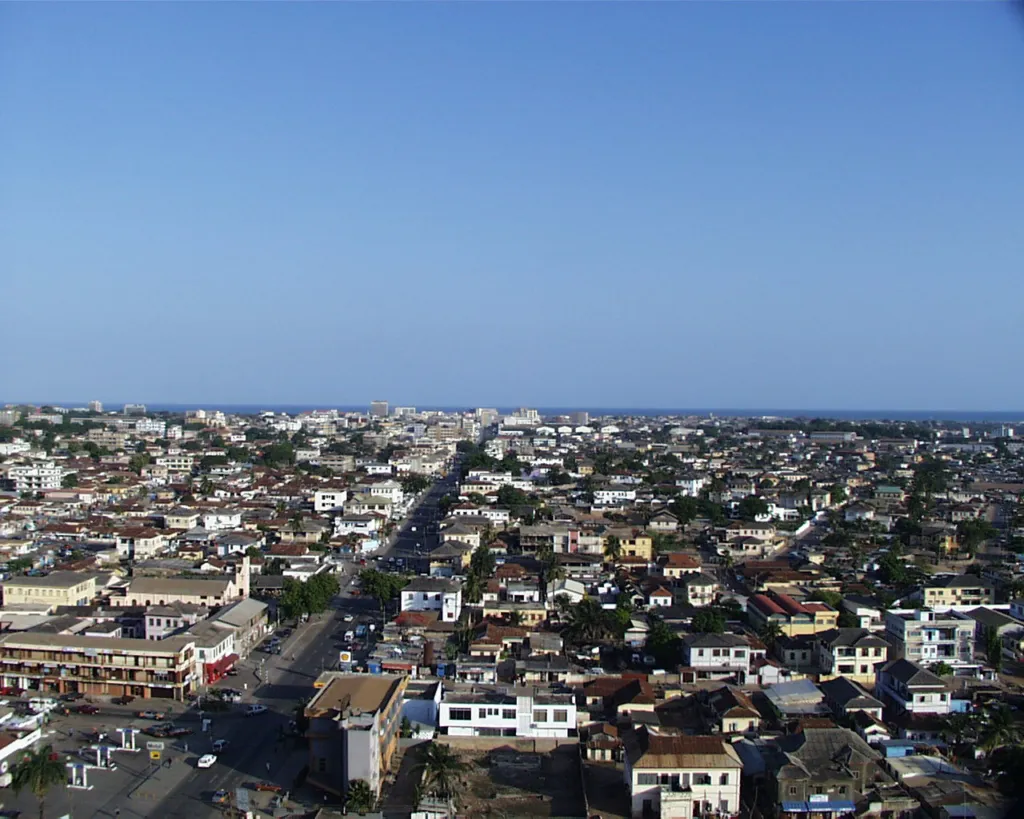
Top photo: Accra, Ghana’s capital (file photo). Photo: Elegant Machines, Wikimedia Commons, CC BY-SA 3.0
